
21 Genius Small Kitchen Hacks That Actually Work (2026)

These small kitchen organization hacks turn a cramped, cluttered kitchen into a space that actually works for everyday cooking. You do not need a renovation, a big budget, or a whole new set of gadgets. You need a clear plan for what stays, where it lives, and how it gets put back.
The 21 hacks below are grouped by zone, so you can fix one area at a time. Start with the zone that annoys you most, then work through the rest over a weekend. Most of these take under 30 minutes, and several cost nothing at all.
Start Smart: Declutter Before You Organise
1. Empty one zone at a time. Do not pull everything out of the whole kitchen at once. Empty one drawer, one shelf, or one cupboard, sort it, and put it back before you move on. You stay in control, and the kitchen stays usable while you work.
2. Be ruthless with duplicates. Count your spatulas, wooden spoons, baking trays, and mugs. Keep the best of each kind and donate the rest. Duplicates are the main reason small drawers jam and small cupboards overflow.
3. Move occasional items out of the kitchen. The fondue set, the giant roasting pan, and the spare glasses for a party you host twice a year do not need prime cupboard space. Box them, label the box, and store it elsewhere. Your everyday items will thank you.
Small Kitchen Organization Hacks for Cabinets and Cupboards
4. Adjust your shelves before you buy anything. Most cupboard shelves move up or down. Raise one shelf to fit tall oil bottles and cereal boxes, and lower another so short stacks of bowls stop wasting headroom. This free fix alone can free up a whole shelf.
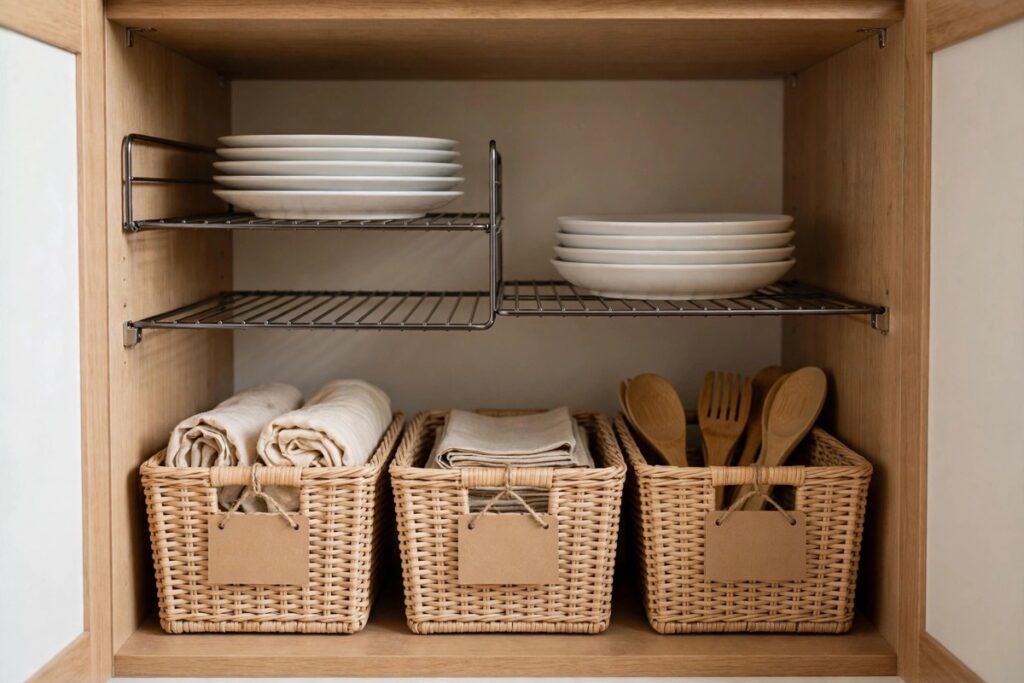
5. Add shelf risers for plates and mugs. A riser creates a second level inside a tall cupboard, so you can see the bowls at the back without unpacking the front row. Use them for mugs, plates, and tins, and leave enough clearance to lift items out easily.
6. Use the inside of cupboard doors. Slim racks, hooks, and small baskets on the inside of a door hold measuring cups, pot lids, cleaning sprays, and cling film. Check the door still closes fully before you load the rack, and keep heavy items low.
7. Put a turntable in deep and corner cupboards. A lazy Susan stops the back of a deep cupboard becoming a graveyard for forgotten tins. Spin it, grab what you need, and spin it back. It works just as well for oils, sauces, and baking supplies.
8. File lids, boards, and trays upright. Stacking lids flat always ends in a noisy avalanche. Stand baking sheets, chopping boards, and pan lids upright in a vertical divider or a tension rod setup, like files in a drawer. You can see each one and pull out just the one you need.
Drawers and Small Items That Always Go Missing
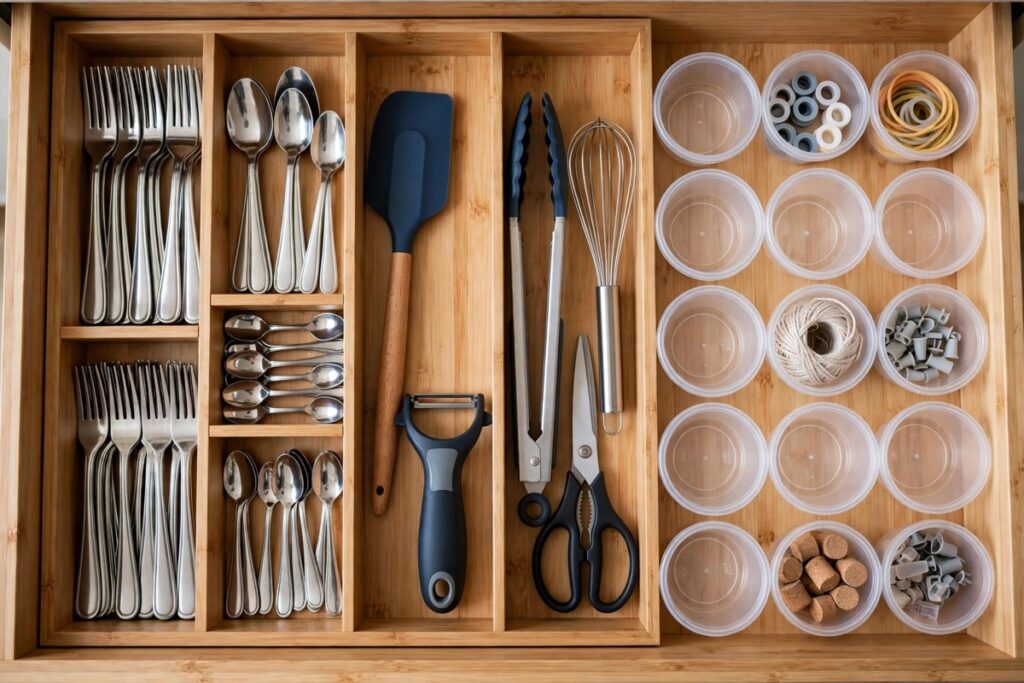
9. Divide every drawer by job. Give each drawer one job and divide it to match. One section for everyday cutlery, one for cooking tools, and one small section for clips, bag ties, and timers. When a drawer has no dividers, small items drift and pile up fast.
10. Store spices where you can read them. Lay spice jars on their sides in a drawer with labels on the lids, or line them up on a narrow shelf or photo ledge near the cooker. Either way, you should be able to read every label without moving five jars first.
11. Corral the tiny stuff in small tubs. Battery-sized kitchen bits like corn holders, thermometer probes, and spare parts belong in small tubs, not loose in a drawer. One tub per category stops the drawer turning into a junk drawer.
Walls and Doors: Free Storage You Already Own
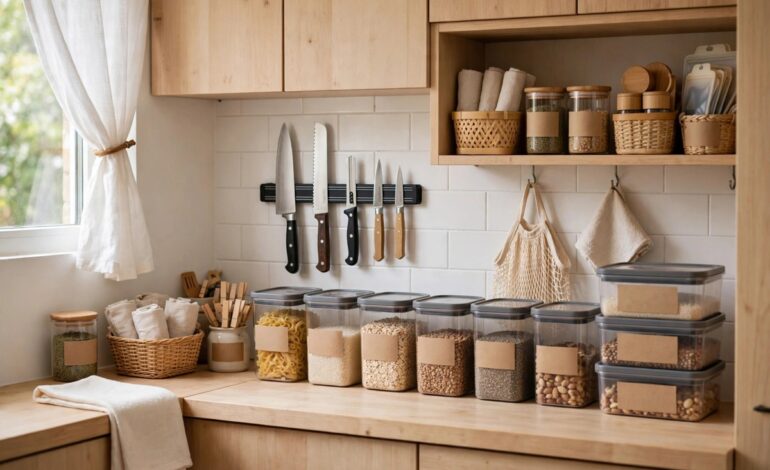
12. Swap the knife block for a magnetic strip. A magnetic strip on the wall frees a whole chunk of counter or drawer space, and it keeps knives visible and easy to grab. Fix it firmly, keep it out of reach of small children, and wipe it down when you wipe the worktops.
13. Hang a rail or pegboard for everyday tools. A simple rail with hooks near the cooker holds tongs, ladles, a colander, and measuring jugs. A pegboard works the same way and lets you move hooks around as your cooking changes.
14. Try an over-door organiser for pantry overflow. A clear over-door organiser on a pantry or cupboard door adds instant shelves for packets, snacks, and wraps without drilling a single hole. Keep heavier items at the bottom so the door swings freely.
Counters and Prep Space You Can Actually Use
15. Keep only daily items on the counter. In a small kitchen, the counter is your workspace, not a display shelf. Keep out only what you use every single day, like the kettle and the cooking oil. Everything else gets a home in a cupboard, drawer, or on the wall.
16. Use an over-sink board when prep space runs out. A board that sits over the sink gives you an extra chopping area for ten minutes, then lifts away. It is a cheap fix for tiny counters, and it pairs well with a roll-up drying rack that also sits over the sink. If you love making dough at home, an easy homemade pizza dough recipe is a good test of your new prep setup, because it shows you exactly how much clear counter you really need.
17. Give the kettle its own station. A tea and coffee station in one corner, with mugs above, tea and coffee beside the kettle, and spoons in a small jar, stops the morning rush scattering items across the whole kitchen. Keep the station compact so it does not eat your prep space.
18. Park a rolling cart where it helps most. A narrow rolling cart can hold baking supplies, hold a chopping board on top, or serve as extra counter space during a big cook. Roll it away when you need floor space, and roll it back when you need an extra pair of hands.
Food Storage That Saves Space and Cuts Waste
19. Decant dry goods into matching square containers. Square, stackable, airtight containers use shelf space far better than a mix of round jars and half-open packets. Label each one with the contents and the date you filled it, and put new stock behind older stock so nothing goes stale at the back.
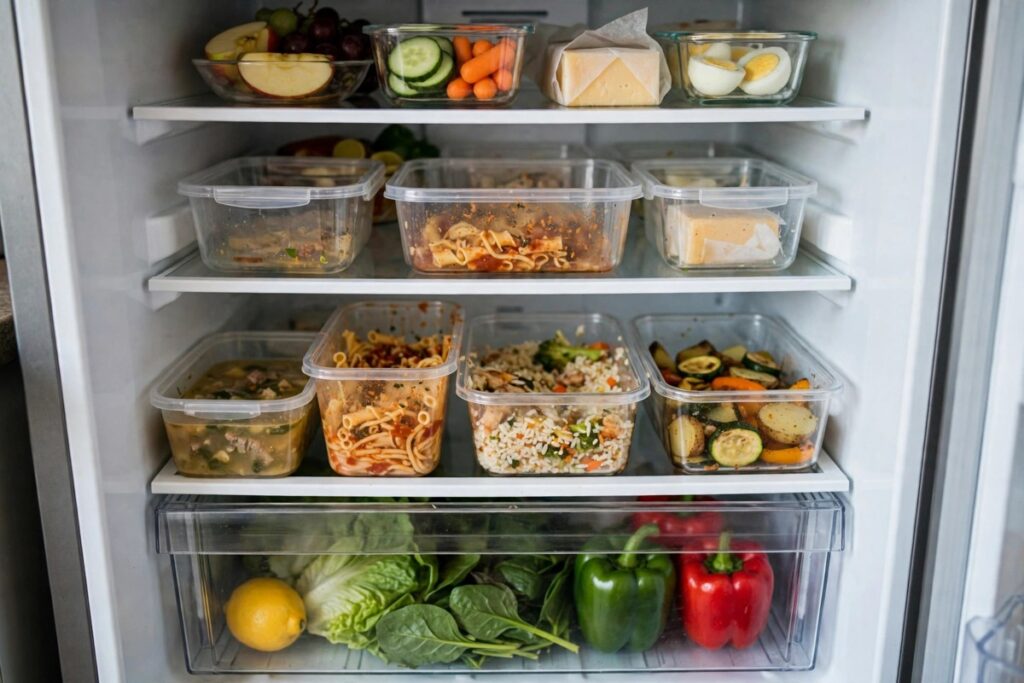
20. Zone your fridge like a tiny shop. Put everyday items at eye level, raw meat low and sealed, and leftovers in clear containers at the front where you will see them. Knowing how long food lasts in the fridge matters just as much as where you put it, because food you can see gets eaten and food hidden at the back gets thrown away. A weekly fridge check, done while you write the shopping list, keeps this system honest.
21. Build a grab-and-go station for busy days. One shelf or basket for snacks, packed lunch items, and breakfast basics saves morning hunting and stops the whole pantry being pulled apart. Stock it once a week, and pair it with meal prep tips for beginners and high protein lunch ideas if you want lunches that practically pack themselves. For more make-ahead inspiration, BBC Good Food meal prep recipes offer a wide range of dishes that hold up well in the fridge.
Conclusion
The best small kitchen organization hacks are not the fanciest ones. They are the ones you will still be using in three months: one home for every item, clear counters, visible food, and a quick reset when things slip. Pick three hacks from this list today, set a timer, and start with the drawer or cupboard that bothers you most. A small kitchen will never be a big kitchen, but with the right zones and habits, it can feel calm, fast, and genuinely enjoyable to cook in.
Frequently Asked Questions
What are the best small kitchen organization hacks for a rented kitchen?
Stick to no-drill fixes first: shelf risers, drawer dividers, over-door organisers, tension rods, and magnetic strips that use adhesive fixings. These give you most of the benefit without risking your deposit, and you can take them with you when you move.
How do I organise a small kitchen on a tight budget?
Start with the free fixes: declutter duplicates, adjust shelves, move occasional items out, and use tubs and jars you already own as drawer dividers. Buy organisers only after you have measured the exact space they need to fit.
How do I keep a small kitchen organised long term?
Use a one-in, one-out rule for new gadgets and mugs, and run a ten-minute reset once a week. Put items back in their zone straight after cooking, and check the fridge and pantry while you write the shopping list.
Where should I start if my whole kitchen feels overwhelming?
Start with one drawer or one shelf, not the whole room. A single finished zone builds momentum, and you will learn which dividers and containers actually fit before you spend money on the rest of the kitchen.
Do clear containers really save space in a small kitchen?
Yes, when they are square, stackable, and all the same style. Mixed round jars waste gaps on every shelf, while matching square containers stack neatly and make it easy to see what you have before you shop.
