
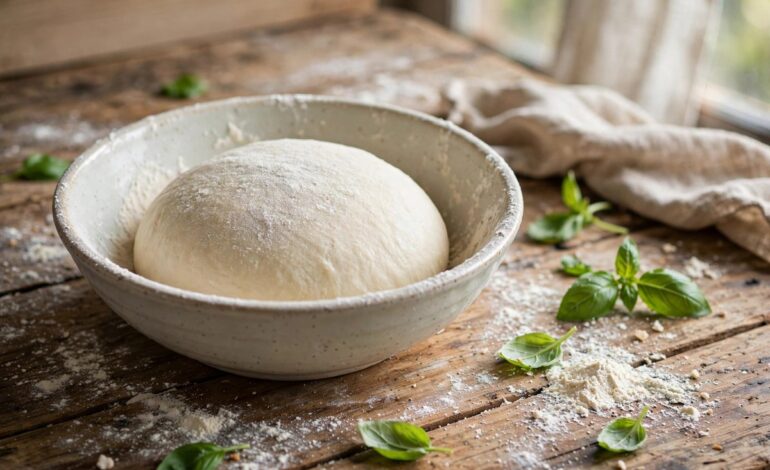

This easy homemade pizza dough recipe gives you a crispy, chewy crust with just five ingredients and about an hour of resting time. No stand mixer, no bread machine, no fiddly techniques. If you can stir and knead for a few minutes, you can have two medium pizzas in the oven tonight that beat anything delivered.
Easy Homemade Pizza Dough Recipe: What You Need
These quantities make 2 medium pizzas (about 25 cm each). Weighing the flour is best, but cup measures are included.
- 500 g strong white bread flour (about 4 cups), plus a little extra for dusting
- 325 ml lukewarm water (about 1 and 1/3 cups), not hot
- 7 g instant yeast (one 7 g sachet, about 2 and 1/4 tsp)
- 10 g fine sea salt (about 2 tsp)
- 2 tbsp extra virgin olive oil, plus a little for the bowl
Why bread flour? Its higher protein builds more gluten, which is what gives the crust that pizzeria chew. Plain all-purpose flour still works and makes a softer, more bready base, so use what you have. Instant yeast needs no pre-dissolving; if you only have active dry yeast, stir it into the warm water first and leave it for 5 to 10 minutes until foamy.
Step-by-Step Method
- Mix the flour and salt in a large bowl. Stir the yeast through the flour, then pour in the lukewarm water and the olive oil.
- Stir with a wooden spoon until a shaggy dough forms and no dry flour remains, about 2 minutes.
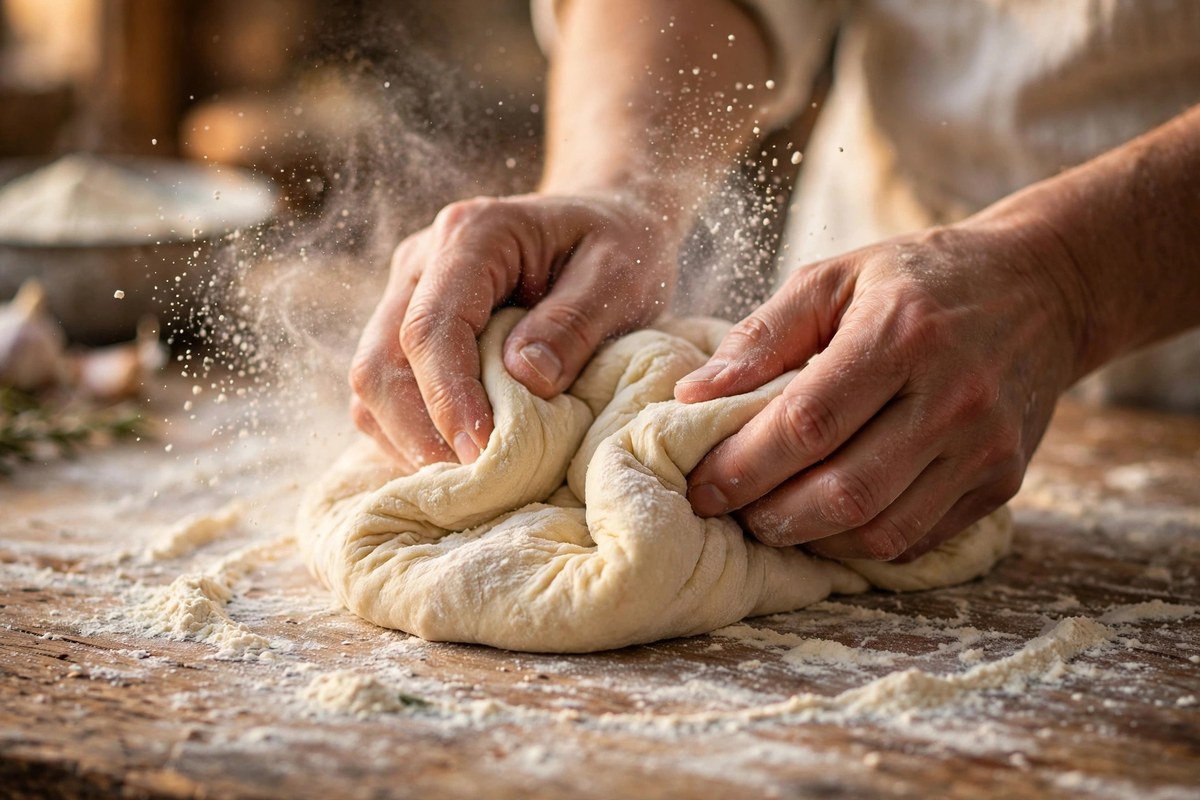
- Tip the dough onto a lightly floured worktop. Knead for 6 to 8 minutes, pushing it away with the heel of your hand and folding it back. It should turn smooth and springy, like an earlobe when poked.
- Rub a clean bowl with a little olive oil. Drop in the dough, turn it once to coat, cover with a damp tea towel, and leave somewhere warm for 45 to 60 minutes, until roughly doubled.
- About 30 minutes into the rise, put your oven on its hottest setting, ideally 250 C (480 F), with a pizza stone, baking steel or heavy upturned baking tray inside to preheat.
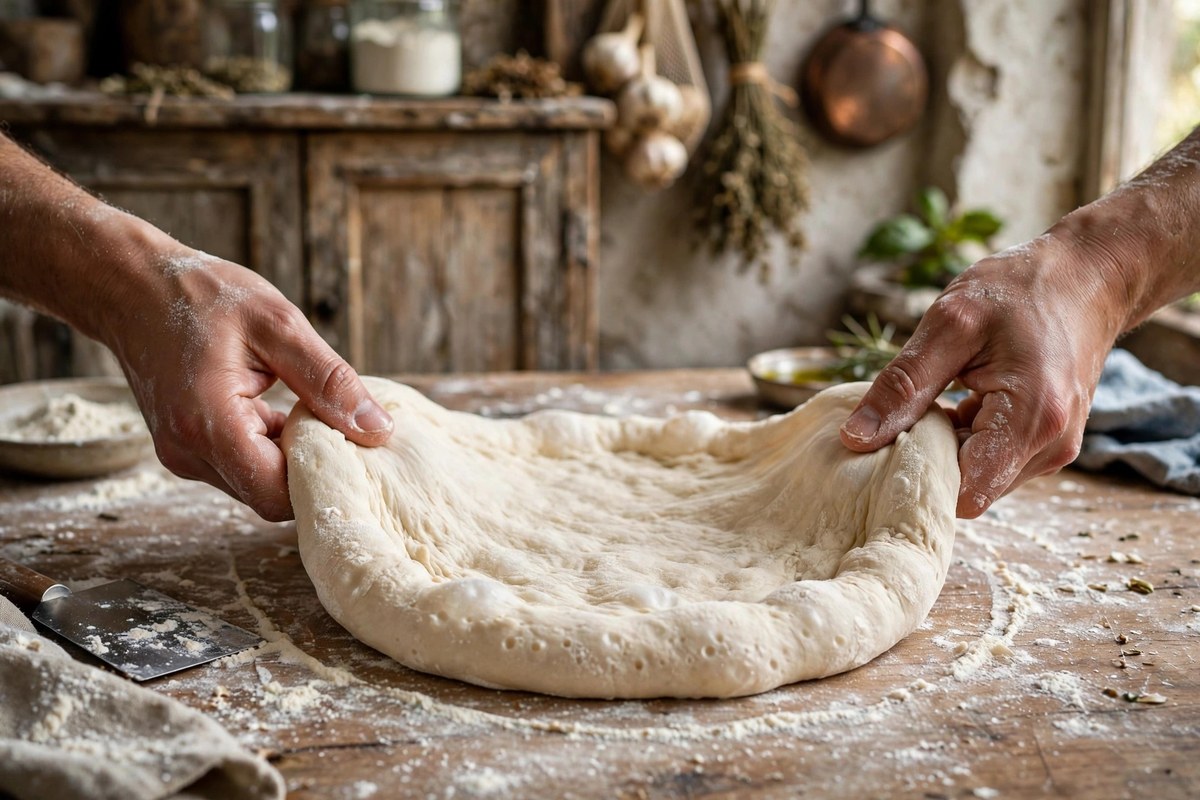
- Tip the risen dough onto the worktop and press it down gently. Cut into two equal pieces. Stretch each piece into a round by hand, turning and letting gravity do the work; a rolling pin is fine too but hand-stretching keeps the airy rim.
- Top lightly, bake for 10 to 12 minutes until the crust is golden and puffed, and slice straight away.
The Crispy, Chewy Crust Secret
Three things separate homemade pizza from a great one. First, heat: a fully preheated oven on maximum with a hot stone or steel gives the base the blast it needs to puff and crisp in minutes. Second, a light hand with toppings: two to three toppings is plenty, because a loaded pizza steams instead of bakes and the crust goes soggy. Third, cornmeal or fine semolina under the base instead of flour, which stops sticking and adds a lovely crunch.
Need topping inspiration? Our guide to the best pizza toppings for your pie walks through classic and creative combinations. Once the dough is second nature, try it as the base for a classic margherita pizza recipe with proper Italian simplicity.
Pizza Dough Troubleshooting
My dough did not rise. The water was probably too hot and killed the yeast, or the yeast was past its date. Water should feel just warm on your wrist. Try again with a fresh sachet.
My crust came out dense. Under-kneading is the usual cause. Give it the full 6 to 8 minutes so the gluten develops, and do not skip the rise. A pale, thick crust also points to an oven that was not hot enough.
My dough is too sticky to handle. Resist dumping in handfuls of flour; that dries the dough out and makes a heavy crust. Dust your hands and the worktop lightly and keep kneading, it firms up as the gluten forms. If it is still unmanageably wet after 8 minutes, add flour one spoonful at a time. A slightly tacky dough is exactly what you want for a chewy crumb.

Make Ahead and Store
The dough keeps beautifully. After kneading, put it in a lightly oiled container, cover, and refrigerate for up to 48 hours; it will develop an even better flavour as it ferments slowly. Bring it back to room temperature for about 30 minutes before shaping. For longer storage, divide and freeze the dough balls in freezer bags for up to 3 months, then thaw in the fridge overnight. Leftover baked pizza? Our guide on how long pizza keeps in the fridge covers safe storage times.
Conclusion
Once you master this easy homemade pizza dough recipe, Friday nights change for good. Five ingredients, one bowl, and about an hour of waiting give you a crust that is crispy on the base, chewy at the rim, and ready for anything you fancy. Keep the oven ripping hot, go easy on the toppings, and the dough will do the rest. Italian night does not end at pizza either; this same bake-it-hot confidence carries straight into a homemade lasagna for Sunday dinner.
Frequently Asked Questions
How long does this easy homemade pizza dough recipe take from start to finish?
About 1 hour 15 minutes in total: roughly 15 minutes of active work plus a 45 to 60 minute rise. Add the 10 to 12 minute bake per pizza, and you are eating in well under an hour and a half. For a faster dinner, let the dough rise in a warm oven with just the light on.
Can I make pizza dough without a stand mixer?
Absolutely. This dough is designed for hand kneading and needs just 6 to 8 minutes on the worktop. No special equipment is required, just a bowl, a wooden spoon and a clean surface. The baking advice from King Arthur Baking’s test kitchen agrees that a short hand knead produces a smooth, pliable pizza dough.
What flour is best for pizza dough?
Strong white bread flour is the best choice for a chewy, structured crust because its higher protein content builds more gluten. All-purpose flour works for a softer, more bready result. Tipo 00 flour gives the most authentic Neapolitan-style texture but needs very high heat to shine, so stick with bread flour for a standard home oven.
Can I freeze pizza dough?
Yes. After kneading, divide the dough into balls, flatten slightly, and freeze in sealed bags with a drizzle of oil for up to 3 months. Thaw overnight in the fridge, then bring to room temperature for 30 minutes before shaping. Frozen dough rises beautifully after thawing.
Why does my dough snap back when I try to stretch it?
The gluten is too tight, usually because the dough has not rested enough. Cover it and walk away for 10 to 15 minutes, then try again; it will stretch much more willingly. Chilled dough straight from the fridge also resists stretching, so let it warm up first.