Meal Prep for Beginners: 12 Tips That Save Hours Every Week

These meal prep tips for beginners will save you hours every single week, and none of them require fancy equipment or chef-level skills. If your weeknights feel like a scramble of takeaway apps and a half-empty fridge, you are in the right place. This guide walks you through twelve simple habits that turn one calm Sunday session into five days of easy lunches and dinners, right here on BiteSavory.
Meal prep is not about cooking twenty identical chicken breasts and eating them joylessly until Friday. It is about doing the thinking and the chopping once, so the rest of your week runs on rails. Start small, stay consistent, and let the routine do the heavy lifting.
Why These Meal Prep Tips for Beginners Actually Work
The science behind meal prep is really just psychology. Every food decision you postpone to a tired weekday evening gets worse: you cook less, you order more, and you waste more. Prepping ahead moves the decisions to a moment when you have time and energy, so the tired version of you just has to reheat and eat.
The other win is waste. Households that plan their weekly food throw away far less than those that shop on instinct. When every ingredient you buy has a job in a container, the sad bag of spinach at the back of the fridge stops happening.
12 Meal Prep Tips for Beginners
Work through these in order. The first four save you money and time immediately; the food-safety tips later in the list keep everything you cook safe to eat all week.
- Plan just three to four meals, not seven. Beginners fail by trying to prep a different dinner for every night. Pick two dinners and two lunches that you genuinely enjoy, and cook enough of each for two to three servings. Seven unique meals is a restaurant schedule, not a home routine.
- Write the plan on paper before you shop. Ten minutes with a notepad beats a forty-minute wander around the supermarket. List your chosen meals, then list every ingredient you need for them. Shop from the list and nothing else, and your trolley stays on budget.
- Choose recipes that share ingredients. A tray of roasted chicken, a chicken stir fry and chicken soup can all come from the same batch of chicken, rice and mixed vegetables. Overlapping ingredients mean less shopping, less chopping and less waste, which is exactly what these meal prep tips for beginners are designed to do.
- Batch cook one protein and one grain. If you cook nothing else, roast a tray of chicken thighs and a big pot of rice or quinoa on Sunday. Protein plus grain plus a sauce or dressing becomes five different lunches when you vary the vegetables and seasonings. Our authentic chicken karahi recipe is a brilliant batch-cooking candidate because curries reheat beautifully.
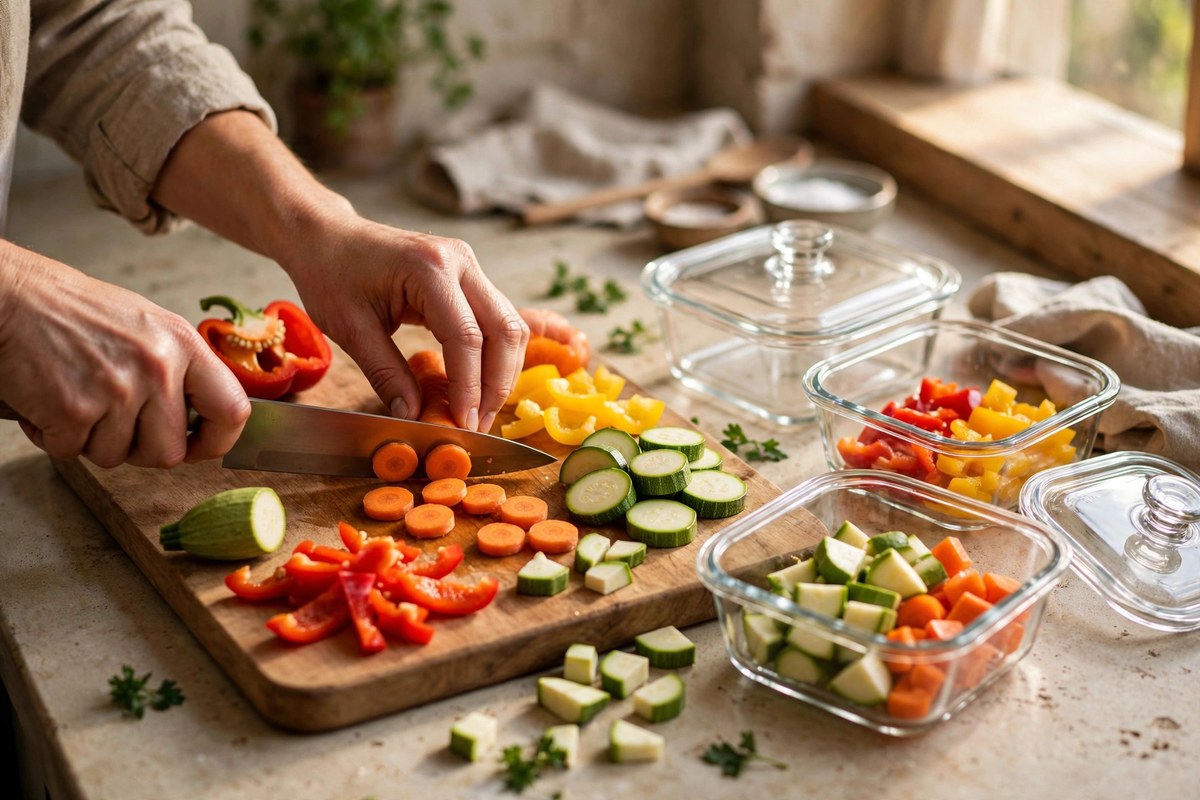
- Wash, chop and portion vegetables ahead of time. Peeling and chopping is the slowest part of any weeknight dinner. Do it all at once: diced onion, sliced peppers, batons of carrot, washed salad leaves in a container with a piece of kitchen paper. Prepped veg keeps for four to five days in the fridge and turns a thirty-minute recipe into a ten-minute one.
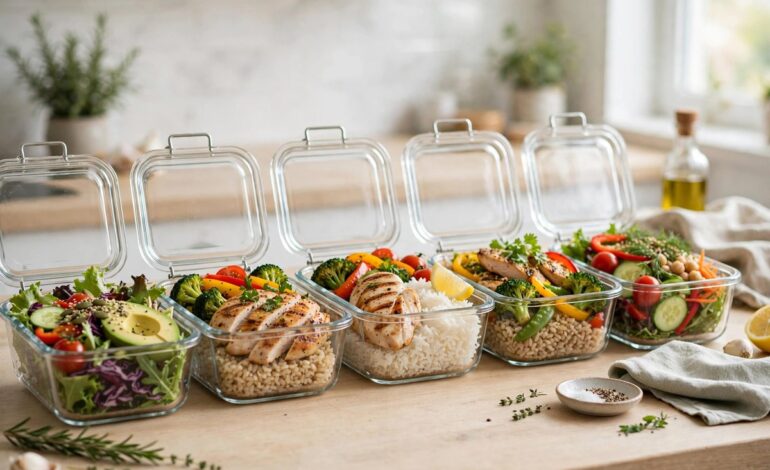
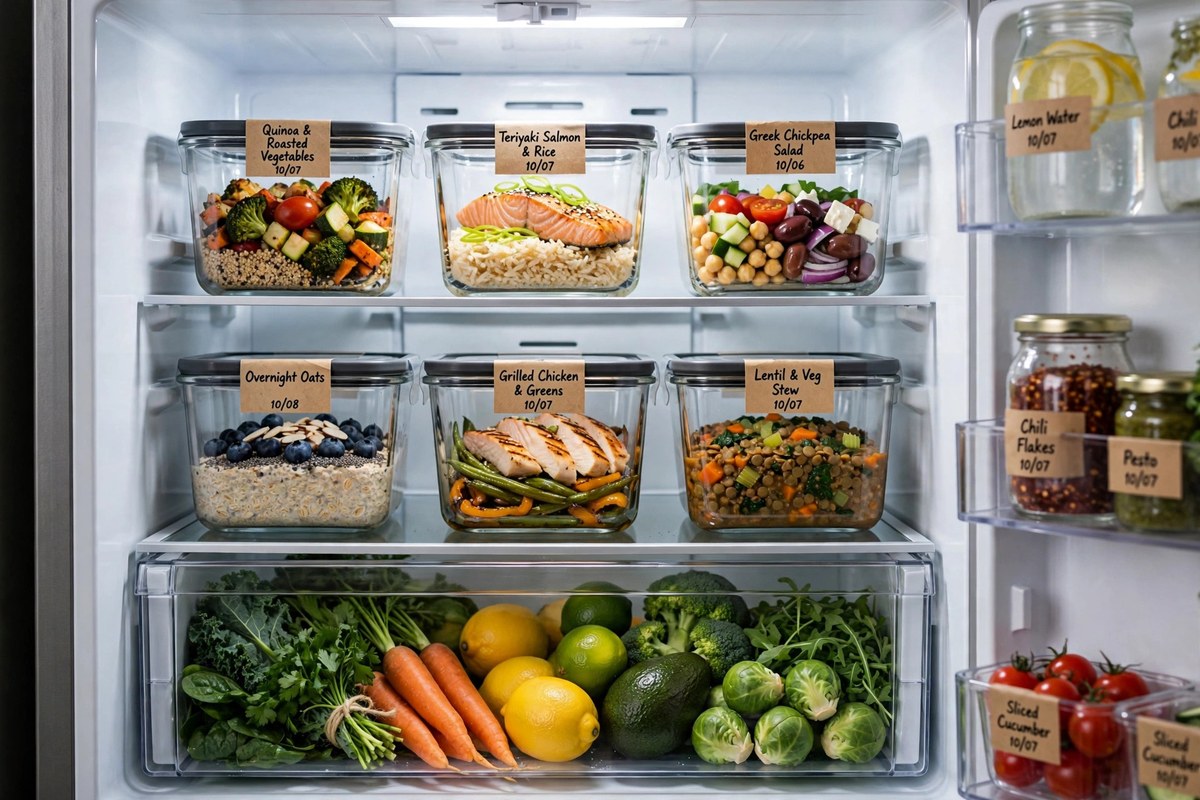
- Use real airtight containers. Flimsy takeaway boxes let air in, and air is what ruins leftovers. Glass containers with snap-lock lids are worth the investment: they keep food fresher, they go from fridge to microwave to dishwasher, and you can see what is inside without opening them. Uniform container sizes also stack neatly in the fridge.
- Label and date every container. On Thursday you will not remember whether that stew was cooked on Sunday or Monday. A strip of masking tape and a marker take ten seconds and remove all doubt. Date the day you cooked, not the day you packed, because the food-safety clock starts at cooking time.
- Cool hot food fast before refrigerating. Bacteria multiply fastest between 40 and 140 degrees Fahrenheit (4 to 60 Celsius), the so-called danger zone. Get cooked food into the fridge within two hours of cooking, or within one hour if the kitchen is hot. Divide big batches into shallow containers so they cool quickly, and never leave a giant pot out on the counter overnight.
- Know the three-to-four-day rule. Cooked meals stay safe in the fridge for three to four days. That means Sunday preps cover you through Wednesday or Thursday, but not the whole week. For day-four and day-five portions, move containers straight into the freezer at the start, then thaw them in the fridge overnight before you need them.
- Reheat to 165 degrees Fahrenheit (74 Celsius). When you reheat leftovers, they need to reach 165F all the way through, checked with a food thermometer if you want to be precise. Stir or rotate partway through for even heating, and bring sauces and soups to a proper rolling boil. Do not reheat food in a slow cooker: most slow cookers do not get hot fast enough to be safe.
- Handle cooked rice with extra care. Rice deserves its own rule because it carries spores of Bacillus cereus, a bacterium whose spores survive normal cooking. The safe move is to cool rice fast, spread it in a shallow container and refrigerate within one hour. Reheated rice is perfectly safe when it has been stored properly.
- Freeze like you mean it. The freezer is the real secret weapon of meal prep. Cooked meals keep well for two to three months frozen, with the best quality in the first month. Freeze in flat portions inside freezer bags or shallow containers, thaw in the fridge overnight, and never refreeze food that has already been thawed at room temperature.
Your First Week: A Simple Starter Plan
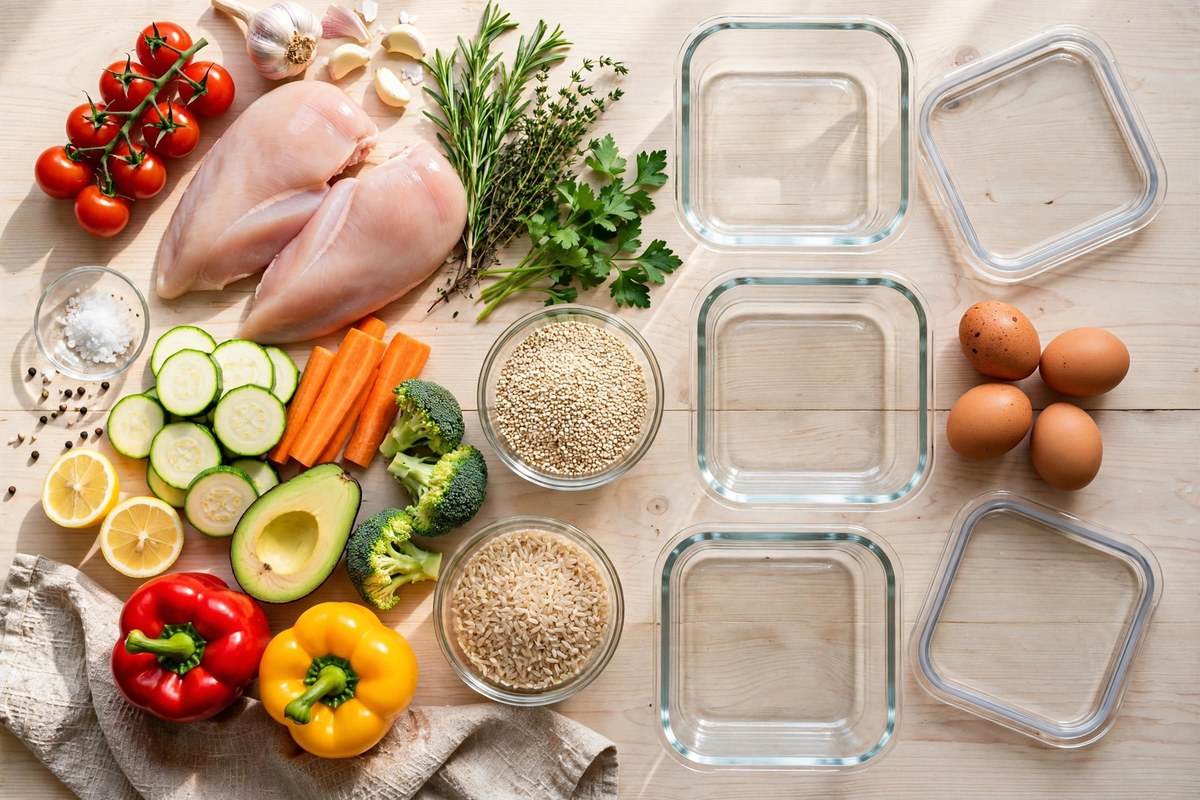
Do not try to master all twelve tips at once. For week one, keep it to a single two-hour Sunday session: roast a tray of chicken thighs, cook a pot of rice, and chop one big batch of mixed vegetables. Divide everything into four labelled containers, and you have lunches covered until Thursday.
While you are in the groove, throw one slow cooker meal together as well. Dinners that cook themselves are the ultimate beginner cheat code, and our 25 easy slow cooker recipes for fall are full of batch-friendly options that divide neatly into freezer portions.
Week two, add breakfast to the routine. Overnight oats or egg muffins take fifteen minutes and remove the morning scramble entirely. By week three the whole system will feel like second nature.
Meal Prep Food Safety Rules to Remember
All the planning in the world means nothing if the food is not safe on day four. The USDA Food Safety and Inspection Service keeps the official guidance on its leftovers and food safety page, and the essentials are the ones in this article: refrigerate within two hours, eat fridge meals within three to four days, and reheat to 165F.
One extra habit worth building: keep a thermometer in your kitchen drawer. It is the only reliable way to know a reheated casserole is hot all the way through, and it takes away all the guesswork.
Conclusion: Meal Prep Tips for Beginners That Actually Stick
These meal prep tips for beginners boil down to one idea: do the hard thinking once, and let your future self coast. Plan four meals instead of seven, cook one protein and one grain, chop your vegetables ahead, and respect the three-to-four-day fridge rule. Add labelling, fast cooling and proper reheating, and you have a system that saves hours every week without a single miserable chicken-breast dinner.
Start this Sunday with the simple starter plan above. Within two weeks you will wonder why you ever cooked dinner from scratch at 7pm on a Wednesday. And when you are ready to expand the rotation, dishes like our perfect smash burger recipe make brilliant weekend treats alongside your prepped weekday meals.
Frequently Asked Questions
How long does meal prep take for beginners?
Most beginners need about two hours for one weekly session, covering lunches for three to four days. Once you settle into a routine and know your recipes, that drops closer to ninety minutes. Start with just lunches or just dinners rather than the whole week.
How far ahead do meal prep tips for beginners recommend prepping?
Meal prep tips for beginners should always respect the three-to-four-day fridge rule. Prep on Sunday and fridge-stored meals are safe through Wednesday or Thursday. For Friday, freeze those portions at the start of the week and thaw them in the fridge overnight.
What containers are best for meal prep?
Glass containers with airtight snap-lock lids are the best all-round choice: they do not stain, they go from fridge to microwave to dishwasher, and you can see the contents at a glance. Pick one or two uniform sizes so they stack neatly in your fridge.
Is it cheaper to meal prep or eat takeaway?
Meal prep is almost always cheaper. A batch-cooked home lunch typically costs a fraction of a takeaway order, and planning cuts the impulse buys that inflate a weekly shop. The savings grow as you get better at reusing ingredients across recipes.
Can I meal prep without a microwave?
Yes. Reheat in a pan on the hob or in the oven instead, and make sure food reaches 165F (74C) all the way through. Glass containers transfer straight to the oven, which makes no-microwave prep straightforward.