10 Best Protein Smoothie Recipes for Weight Loss (2026)

The best protein smoothie recipes for weight loss share one simple test. Each drink must keep you full until your next meal, without quietly turning into a dessert. That means roughly 20g or more of protein, a good amount of fibre, and a calorie count you actually know. Fruit and juice alone will not pass that test, because they top out near 3g of protein. Add a measured protein source, some fibre and a little healthy fat, and the same glass becomes a proper meal or a filling snack.
Use this guide as a full set of recipes, not as a list to scroll past. Every recipe serves one, blends in about five minutes, and uses ingredients you can find in a normal supermarket. Nutrition figures are approximate and typical for the ingredients listed, not lab verified results, because brands and fruit sizes vary. Treat them as a guide for comparing recipes, not as exact promises.
Best Protein Smoothie Recipes for Weight Loss: The Builder First
Before the ten recipes, learn the builder. It lets you swap ingredients without breaking the formula, and it is the skill competitors rarely teach properly.
Start with one cup of liquid. Unsweetened almond milk, skimmed milk, soy milk or water all work, and soy milk adds more protein than almond milk. Add one measured protein source: a scoop of protein powder, a cup of Greek yogurt, half a cup of cottage cheese, or three quarters of a cup of silken tofu. Add one cup of frozen fruit for thickness and sweetness. Add one fibre source: a tablespoon of chia seeds, ground flaxseed or oats. Add flavour with cinnamon, vanilla, cocoa or mint. Blend liquid and powder first for ten seconds, then add the rest and blend until smooth.
Keep the sugar traps in check. Juice removes fibre and concentrates sugar, honey and maple syrup add calories fast, and a second tablespoon of peanut butter can add close to 100 calories. Sweetness should come from fruit first, and any sweetener should be measured, not poured.
The 10 Recipes at a Glance
| Recipe | Approx. calories | Approx. protein | Best for |
|---|---|---|---|
| Berry Chia Greek Yogurt | 280 | 26g | Highest fibre |
| Peanut Butter Banana | 360 | 28g | Post workout hunger |
| Green Spinach and Apple | 330 | 24g | A veggie packed breakfast |
| Chocolate Peanut Butter | 320 | 27g | A dessert style swap |
| Tropical Mango and Pineapple | 300 | 23g | A lighter, brighter taste |
| Strawberry Oat Breakfast | 350 | 29g | A full meal replacement |
| Blueberry Kefir and Flax | 290 | 23g | A tangy, gut friendly option |
| Coffee Mocha Protein | 230 | 28g | A morning coffee replacement |
| Chocolate Cherry Tofu | 300 | 22g | Dairy free, no powder |
| Peaches and Cream Cottage Cheese | 310 | 26g | No powder, creamy texture |
1. Berry Chia Greek Yogurt Smoothie
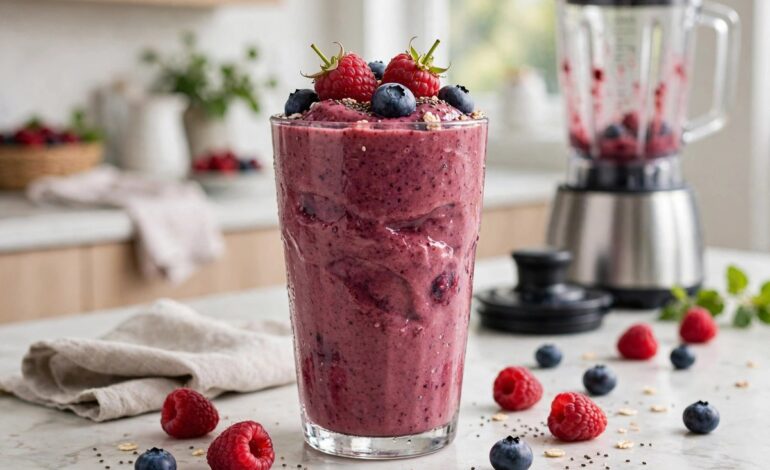
Blend 1 cup nonfat Greek yogurt, 1 cup frozen raspberries, 1 tablespoon chia seeds, half a cup of unsweetened almond milk and ice. Raspberries give the most fibre per calorie of the common berries, and chia thickens the drink so you sip it slowly. Typical figures: about 280 calories, 26g protein and 11g fibre. If you use flavoured yogurt, check the label, because sweetened versions can add 10g or more of sugar.
2. Peanut Butter Banana Smoothie
Blend 1 scoop vanilla protein powder, 1 cup unsweetened almond milk, half a frozen banana, 1 tablespoon peanut butter and 1 tablespoon ground flaxseed. This is the most filling recipe on the list, so save it for days when lunch will be late. Typical figures: about 360 calories, 28g protein and 8g fibre. For a lighter version, swap the peanut butter for powdered peanut butter and save roughly 100 calories.
3. Green Spinach and Apple Smoothie
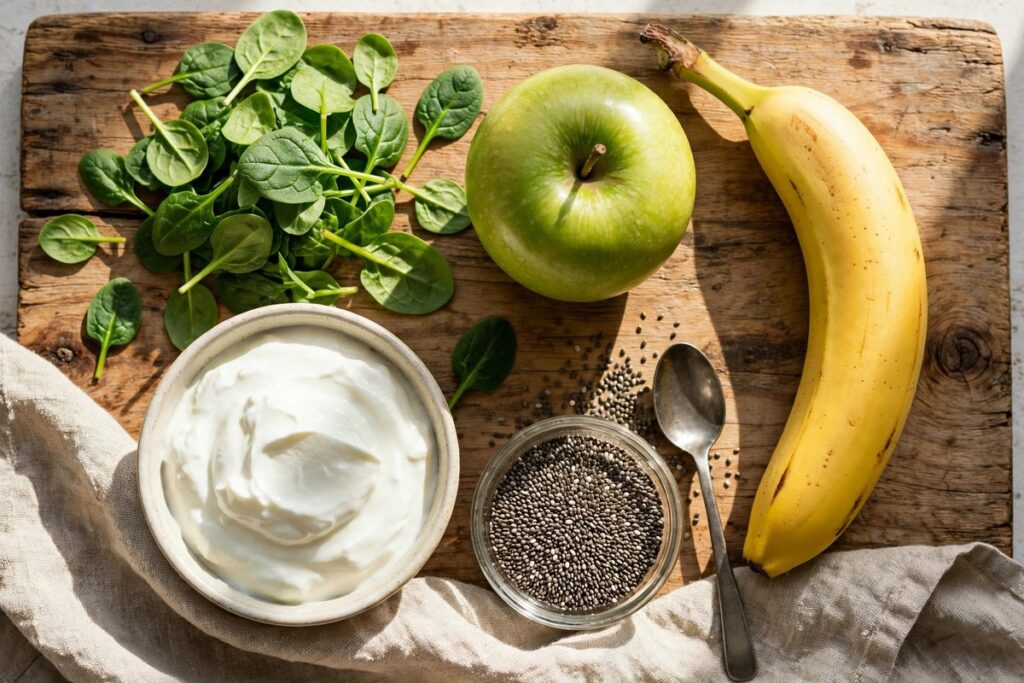
Blend 2 cups baby spinach, 1 small green apple, half a banana, 1 cup soy milk, 1 scoop vanilla plant protein powder and 1 tablespoon chia seeds. Blend the spinach with the milk first, so no leafy bits survive. Typical figures: about 330 calories, 24g protein and 9g fibre. The apple keeps it sweet, the spinach disappears behind the fruit, and the drink stays bright green rather than muddy.
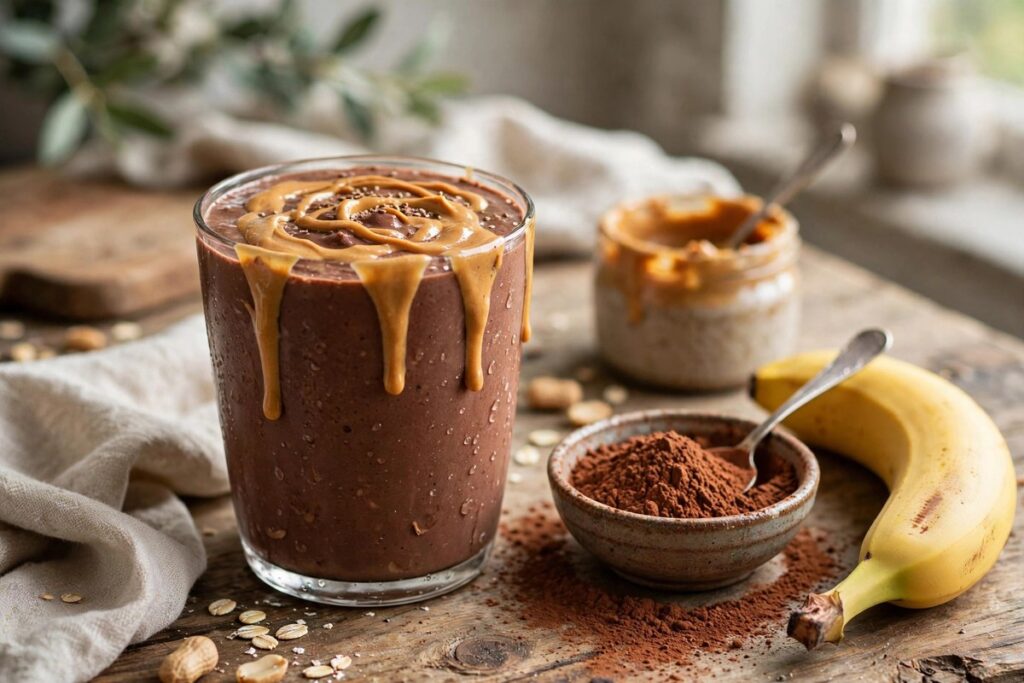
4. Chocolate Peanut Butter Smoothie
Blend 1 scoop chocolate protein powder, 1 cup unsweetened almond milk, half a frozen banana, 1 tablespoon unsweetened cocoa and 1 tablespoon powdered peanut butter. This works as a dessert swap, because it tastes rich while staying in meal territory. Typical figures: about 320 calories, 27g protein and 6g fibre. If you want a frozen dessert comparison first, read our gelato vs ice cream guide, then decide whether a smoothie or a small scoop better fits your day.
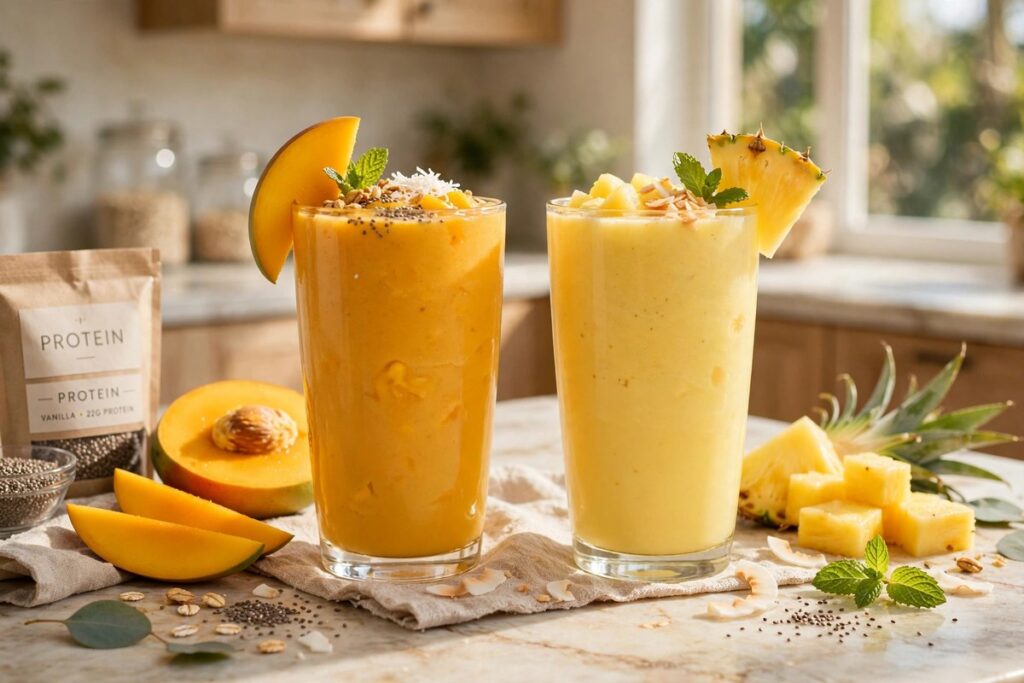
5. Tropical Mango and Pineapple Smoothie
Blend 1 scoop vanilla protein powder, 1 cup coconut drinking milk, 1 cup frozen pineapple, half a cup of frozen mango and a squeeze of lime. Mango is more calorie dense than berries, so keep the portion to half a cup and let the pineapple do the sweet work. Typical figures: about 300 calories, 23g protein and 5g fibre. Add a handful of spinach if you want extra fibre without changing the flavour much.
6. Strawberry Oat Breakfast Smoothie
Blend 1 scoop strawberry or vanilla protein powder, 1 cup skimmed milk, 1 cup frozen strawberries and a quarter cup of rolled oats. Let the oats sit in the milk for two minutes before blending, so they soften. Typical figures: about 350 calories, 29g protein and 6g fibre. This is the best full breakfast of the ten, because oats add staying power that fruit alone cannot match. Drink it within ten minutes, because oats thicken as they sit.
7. Blueberry Kefir and Flax Smoothie
Blend 1 cup plain low fat kefir, half a cup of nonfat Greek yogurt, 1 cup frozen blueberries and 1 tablespoon ground flaxseed. Kefir alone is modest in protein, so the yogurt is what lifts this drink into meal territory. Typical figures: about 290 calories, 23g protein and 6g fibre. Choose plain kefir, because flavoured versions can add 15g or more of sugar per cup.
8. Coffee Mocha Protein Smoothie
Blend 1 scoop chocolate or vanilla protein powder, 1 cup skimmed milk, half a cup of chilled cold brew coffee, 1 tablespoon unsweetened cocoa and ice. This replaces a coffee shop mocha, which can easily pass 350 calories, with a leaner drink that still feels like a treat. Typical figures: about 230 calories, 28g protein and 3g fibre. Because fibre is low, pair it with a small handful of nuts or a piece of fruit if it needs to last until lunch.
9. Chocolate Cherry Tofu Smoothie
Blend three quarters of a cup of silken tofu, 1 cup unsweetened soy milk, 1 cup frozen pitted cherries and 1 tablespoon unsweetened cocoa. Silken tofu blends to a thick, pudding like texture with no dairy and no powder. Typical figures: about 300 calories, 22g protein and 6g fibre. If you swap soy milk for almond or oat milk, protein falls noticeably, so keep soy milk for this recipe.
10. Peaches and Cream Cottage Cheese Smoothie
Blend three quarters of a cup of cottage cheese, 1 cup fresh or frozen sliced peaches, half a cup of skimmed milk, a quarter cup of rolled oats and a pinch of cinnamon. Blend for a full minute, because cottage cheese needs time to turn silky. Typical figures: about 310 calories, 26g protein and 5g fibre. Frozen peaches work well all year and cost less than fresh out of season.
Protein Bases and Milks: The Swap Table
Not every protein base suits every reader, so use this table to rebuild any recipe above.
| Base | Strength | Watch out for |
|---|---|---|
| Whey or pea protein powder | Highest protein per scoop, consistent | Flavoured powders add sugar, check the label |
| Greek yogurt | Thick, tangy, no powder needed | Flavoured yogurt adds sugar fast |
| Cottage cheese | Creamy, slow digesting, cheap | Higher sodium, needs a long blend |
| Silken tofu | Dairy free, smooth, neutral taste | Needs soy milk to keep protein up |
| Kefir plus yogurt | Tangy, pourable, gut friendly | Kefir alone is too low in protein |
For milk, soy milk adds the most protein, skimmed milk sits in the middle, and unsweetened almond milk is lowest in calories but also lowest in protein. Match the milk to the recipe, and do not let a low calorie milk quietly drop a meal smoothie into snack territory.
Meal Smoothie or Snack Smoothie
A meal smoothie should sit around 300 to 400 calories with 20g or more of protein and at least 5g of fibre, a target that matches the meal replacement smoothie targets used by other recipe developers. A snack smoothie can be smaller, around 200 to 250 calories, but it should still carry 20g of protein or it will not hold you. The mistake is drinking a 300 calorie smoothie on top of a full breakfast and calling it a weight loss drink. A smoothie helps only when it replaces a meal or snack of equal or greater calories.
Fixes for Thin, Gritty, Icy or Bland Blends
Thin blend: use frozen fruit instead of fresh, add half a frozen banana, or add a tablespoon of oats. Gritty blend: blend liquid and powder first, then add frozen items, and blend for a full 45 to 60 seconds. Icy blend: use less ice when fruit is already frozen, and add liquid a splash at a time. Bland blend: add cinnamon, vanilla, cocoa, mint or a squeeze of lemon or lime before adding sweetener. Separated blend: drink it fresh, because separation is normal as a smoothie sits, and a quick shake or five second reblend fixes it.
Prep and Storage Without the Fuss
Freeze fruit in single serving bags, so mornings need no chopping. Portion dry ingredients like oats, seeds and protein powder into small containers for the week. For a full prep routine, our meal prep tips for beginners show how one short session covers several days. A blended smoothie keeps best for up to 12 hours in a full, tightly capped jar in the fridge, shaken before drinking. Do not store it for days, because texture and freshness fall away fast. For a lighter lunch on smoothie days, pair a snack tier drink with our creamy chicken soup, or balance the week with how to roast vegetables crispy for a low calorie, high flavour side.
Conclusion: Best Protein Smoothie Recipes for Weight Loss That Actually Fill You
The best protein smoothie recipes for weight loss are not the sweetest or the prettiest. They are the ones with a measured protein source, real fibre, a known calorie count and a job in your day, either as a meal or as a filling snack. Start with the berry chia yogurt smoothie for fibre, the strawberry oat smoothie for a full breakfast, and the chocolate cherry tofu smoothie if you want dairy free. Build the rest with the builder, watch the sugar traps, and let the drink replace something, not sit on top of everything else. Done that way, a smoothie becomes a tool you can repeat, not a drink you regret by lunchtime.
Frequently Asked Questions
Can I make the best protein smoothie recipes for weight loss without protein powder?
Yes. Greek yogurt, cottage cheese and silken tofu all reach 20g or more of protein when measured properly. A cup of Greek yogurt alone carries roughly 20g or more, and pairing it with milk or kefir lifts the total further. Powder is convenient, not essential.
Can I drink a protein smoothie every day for weight loss?
For most healthy adults, one smoothie a day as a meal or snack replacement fits fine, as long as at least one solid meal stays in the day and ingredients rotate. Eating the same recipe daily gets boring fast, so cycle through three or four recipes across the week. Speak to a clinician first if you are pregnant, breastfeeding, manage diabetes or kidney disease, or take medication that must be taken with food.
Is frozen fruit as good as fresh fruit in a smoothie?
Yes, and frozen fruit often blends better, because it thickens the drink without extra ice. Frozen berries, mango and peaches are picked and frozen at ripeness, and they cost less out of season. Fresh fruit works too, but add ice for thickness and expect a thinner result.
Why am I not losing weight even though I drink protein smoothies?
The usual reasons are a smoothie added on top of normal meals, unmeasured peanut butter, juice instead of whole fruit, or sweetened yogurt and milk. Measure the high calorie ingredients, use the drink as a replacement, and check the total day, not just the glass. A smoothie cannot create a calorie deficit on its own.
How many calories should a weight loss smoothie have?
Aim for 300 to 400 calories for a meal replacement and 200 to 250 calories for a snack, with 20g or more of protein in both cases. Below 250 calories, a drink is a snack, not a meal, no matter how healthy it sounds. Above 500 calories, it needs to replace a large meal to help weight loss at all.