Easy 20-Minute Lo Mein Recipe (Better Than Takeout)

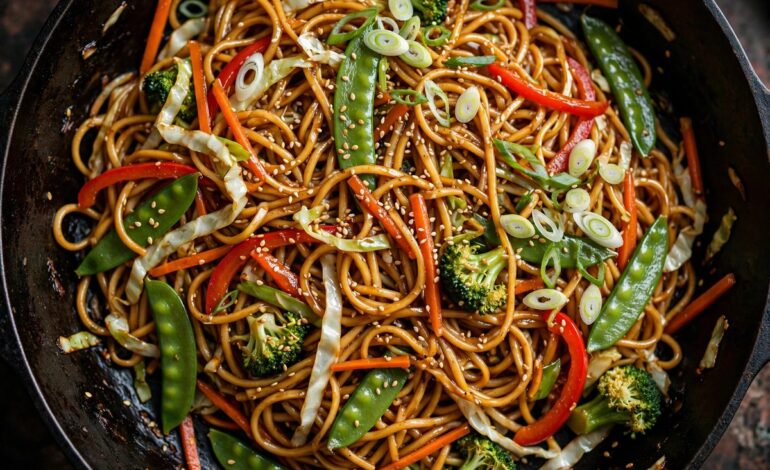
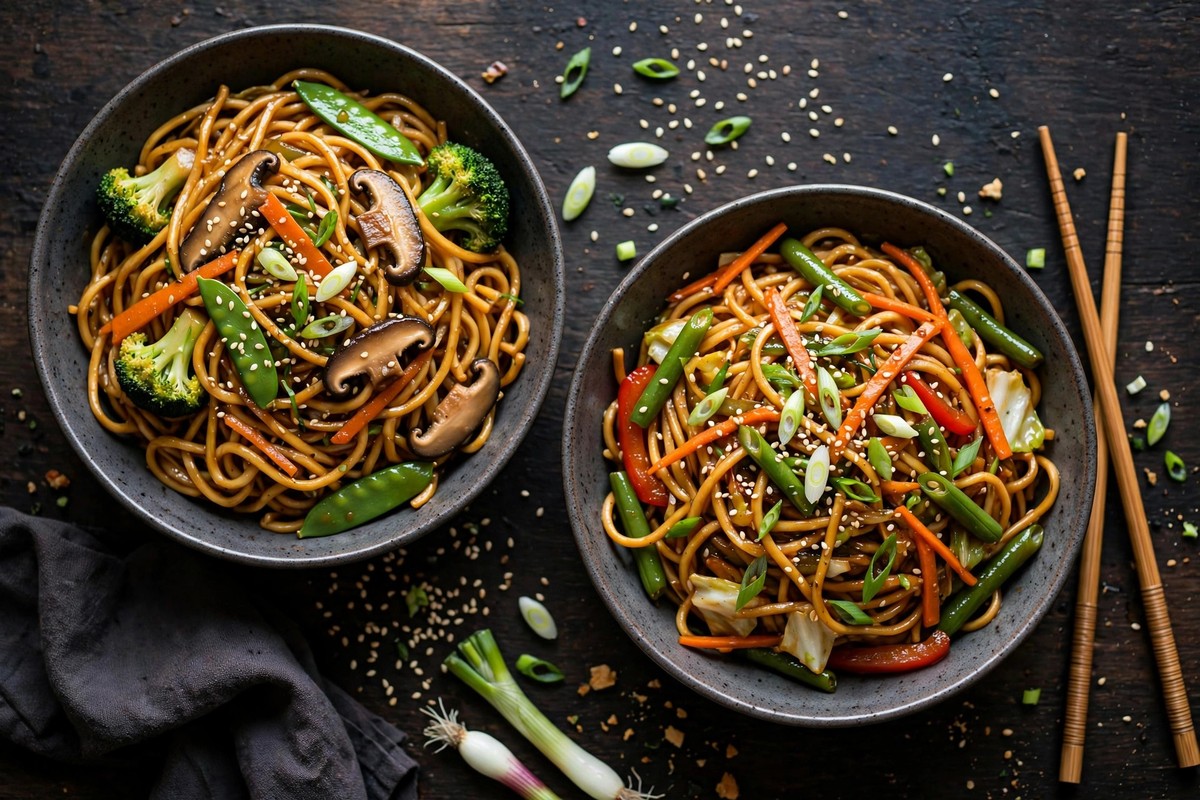
This easy lo mein recipe gives you glossy, chewy noodles tossed with crisp vegetables in a rich, takeout-style sauce, all in about 20 minutes. It tastes fresher than delivery, costs far less, and every sauce ingredient is easy to find at a supermarket, right here on BiteSavory.
Lo mein means “stirred noodles” in Chinese, and the secret is exactly that: noodles tossed through a hot wok with vegetables and sauce rather than fried crisp. Keep reading for the sauce breakdown, noodle swaps, and the three protein variations.
What You Need for This Easy Lo Mein Recipe
Serves 4. Prep 10 minutes, cook 10 minutes.
For the noodles:
225g (8oz) fresh lo mein noodles or dried wheat noodles
1 teaspoon vegetable oil, for tossing the cooked noodles
For the sauce (whisk together in a small bowl):
2 tablespoons light soy sauce (salt and umami)
1 tablespoon dark soy sauce (deep colour and mild sweetness)
1 tablespoon oyster sauce (body and richness)
1 tablespoon toasted sesame oil (nutty aroma)
1 teaspoon sugar (balances the salt)
2 teaspoons cornflour, mixed smooth with 60ml (1/4 cup) water or low-sodium chicken stock (glossy coating)
For the stir-fry:
2 tablespoons vegetable oil, or any neutral high-heat oil
2 garlic cloves, finely chopped
1 teaspoon fresh ginger, grated
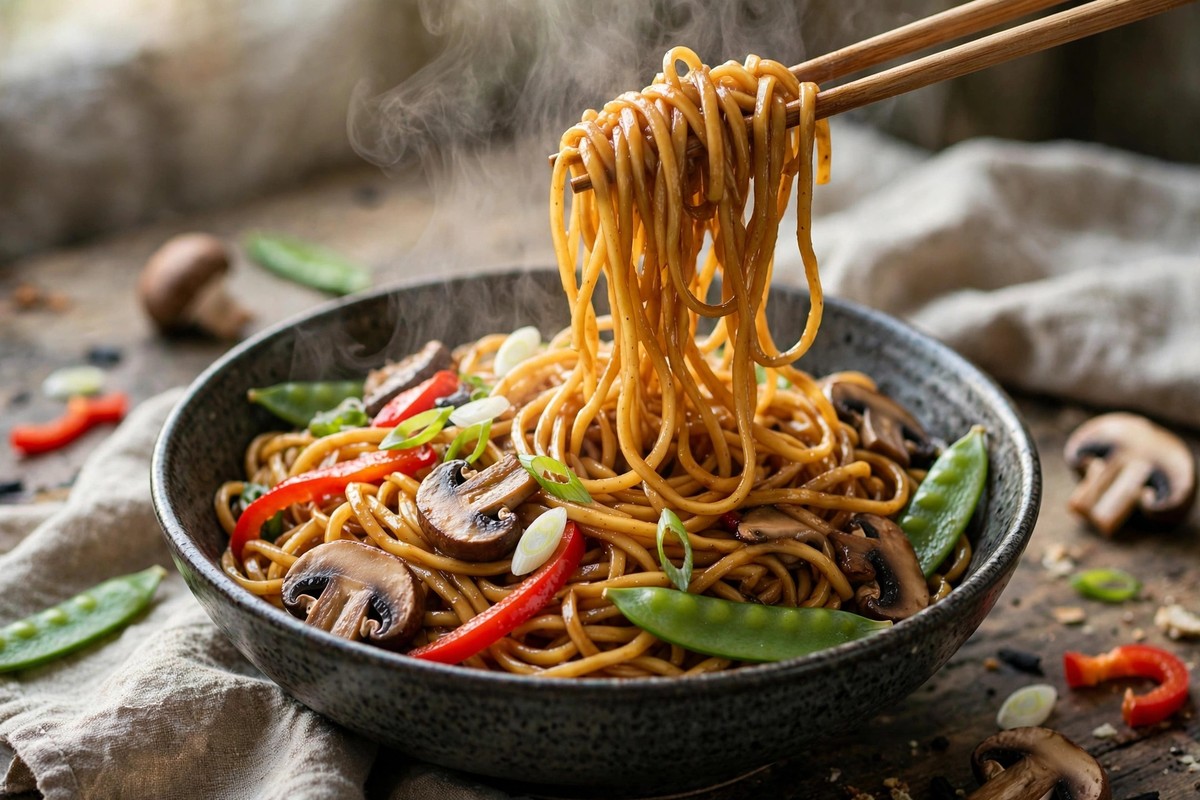
1 red bell pepper, thinly sliced
1 medium carrot, cut into matchsticks (about 100g)
150g mushrooms, sliced
100g snow peas, ends trimmed
2 spring onions, sliced, whites and greens separated
Sesame seeds, to garnish (optional)
Which Noodles to Use for Lo Mein
Traditional lo mein uses thick wheat and egg noodles, sold as “lo mein noodles” in Asian supermarkets, fresh or dried. Fresh ones only need a brief soak in boiling water to loosen, a method used by several well-tested versions including Christie at Home’s lo mein method.
If you cannot find them, work down this swap ladder. Dried lo mein or wheat noodles are the closest match. Spaghetti or linguine work surprisingly well and are the easiest supermarket option. Ramen noodles (without the seasoning sachet) give a good chew. Whichever you use, cook them one minute less than the packet says, because they finish cooking in the wok.
How to Make Lo Mein in 20 Minutes
1. Mix the sauce and prep everything. Whisk all the sauce ingredients in a small bowl until the cornflour dissolves. Slice all vegetables and keep them near the stove. Lo mein cooks fast, so there is no time to chop mid-cook.
2. Cook the noodles. Boil the noodles one minute less than the packet directions so they stay chewy. Drain, toss with the teaspoon of oil to stop sticking, and set aside.
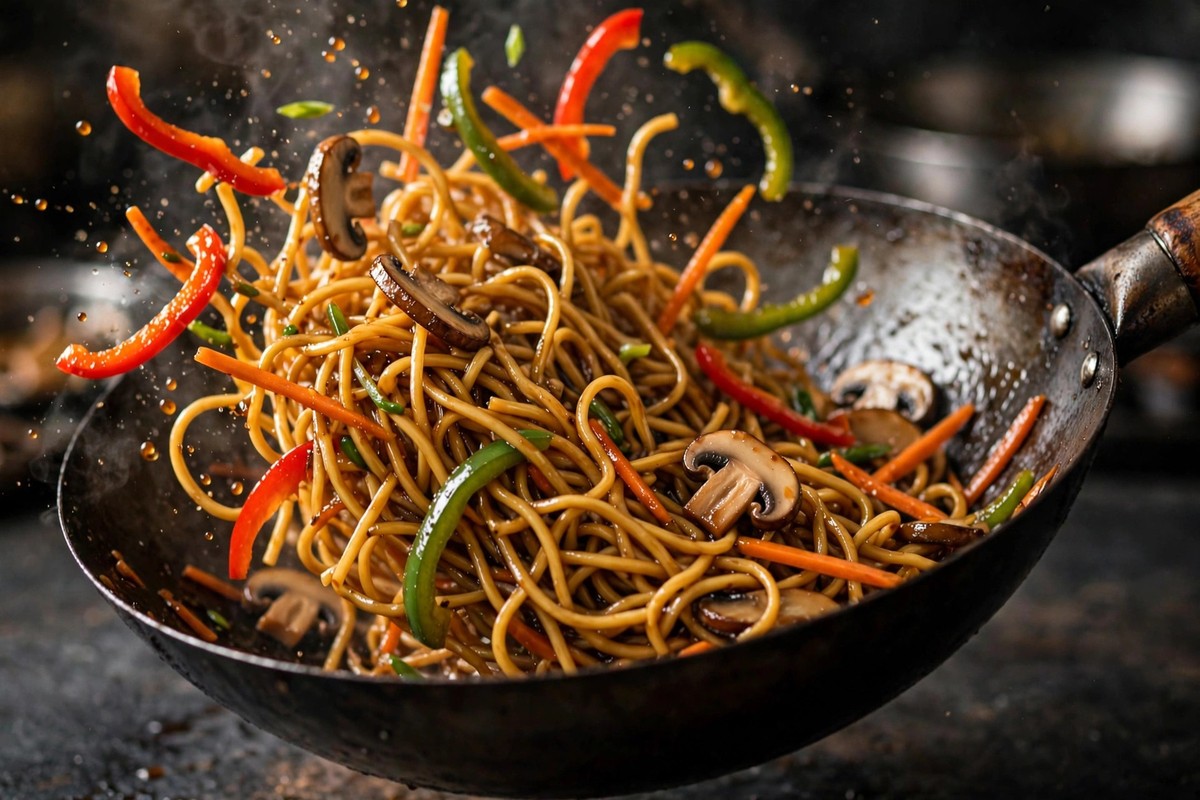
3. Heat the wok until it smokes. Add 1 tablespoon of oil to a wok or the largest frying pan you own over high heat. When it shimmers, add the garlic, ginger, carrot, pepper and mushrooms. Stir-fry for 2 to 3 minutes until just tender.
4. Add the snow peas and spring onion whites. Cook for 1 minute more. The vegetables should be crisp-tender, not soft. If they release water, let it fully evaporate before moving on, or the sauce will turn thin.
5. Toss in the noodles and sauce. Add the noodles, give the sauce a final whisk, and pour it over. Toss everything for 1 to 2 minutes until the noodles are glossy and evenly coated, then take the pan off the heat.
6. Finish and serve. Scatter over the spring onion greens and sesame seeds and serve immediately in warm bowls.
Wok Tips That Keep It Better Than Takeout
Keep the heat high and the pan uncrowded. A crowded pan steams vegetables instead of searing them. If your pan is small, cook the vegetables in two batches.
Do not skip the cornflour slurry. It is what gives restaurant lo mein that glossy, clinging sauce. Add it to the sauce bowl, not the hot pan, so it thickens evenly without lumps.
Taste the sauce before it hits the noodles. It should taste slightly too salty on its own. The bland noodles will balance it perfectly once tossed.
Serve it fresh. Lo mein is at its best the moment it leaves the wok. The noodles keep absorbing sauce as they sit, so make the sauce first and the noodles last.
Chicken, Prawn and Veggie Variations
Chicken lo mein: Slice 250g of chicken breast into thin strips. Sear in the hot wok for 3 to 4 minutes until just cooked through, remove to a plate, then add back with the noodles in step 5. Our easy chicken thigh recipes are a good source of alternative chicken cuts that stay juicy in stir-fries.
Prawn lo mein: Use 250g of raw king prawns. Stir-fry for 2 minutes until pink and curled, then remove and add back at the end so they stay tender.
Veggie and tofu lo mein: Press 200g of firm tofu, cut into cubes and crisp in the hot wok with a little oil for 4 to 5 minutes before the vegetables. For a fully veggie version, use vegetarian stir-fry sauce instead of oyster sauce and swap in extra mushrooms and baby corn.
Storage, Reheating and Make-Ahead
Store leftover lo mein in an airtight container in the fridge for up to 3 days. Reheat in a hot pan with a splash of water for 2 to 3 minutes, tossing until steaming, or microwave for 1 to 2 minutes. The noodles will be slightly softer but still tasty.
To get ahead, whisk the sauce up to 3 days in advance and keep it covered in the fridge, and chop all the vegetables the night before. Cook the noodles fresh on the day for the best chewy texture. Our meal prep tips for beginners walk through safe cooling and storage for stir-fries like this one.
Conclusion: An Easy Lo Mein Recipe Worth Making Weekly
This easy lo mein recipe beats takeout on flavour, cost and speed, and once you know the sauce ratios you can riff endlessly: chicken on a training day, prawns for a treat, tofu for a meat-free Monday. Keep a stash of soy sauce, oyster sauce and sesame oil in the cupboard and a 20-minute dinner is never far away.
If you like weeknight Asian-style dinners, our easy butter chicken recipe is another takeout classic made simple at home. Master the sauce, and you will never pay delivery prices for noodles again.
Frequently Asked Questions
Why did my lo mein turn out watery?
Water is the usual culprit. Vegetables release liquid as they cook, and if it is still in the pan when the sauce goes in, the sauce thins out. Stir-fry over high heat and let any liquid fully evaporate before adding the noodles and sauce, exactly as the method above describes.
What is the difference between light and dark soy sauce?
Light soy sauce is saltier and thinner; it provides the main seasoning. Dark soy sauce is thicker, darker and mildly sweet; it gives lo mein its deep brown colour and a gentle caramel note. Use both in the ratio above for the classic look and flavour.
What is the difference between lo mein and chow mein?
Lo mein noodles are boiled until soft, then tossed with sauce and vegetables. Chow mein noodles are partially fried so parts of them turn crisp. This recipe is true lo mein: soft, silky noodles with no frying step.
Which noodles should I buy if there is no Asian store nearby?
Dried spaghetti or linguine from any supermarket are the best widely available swap; they cook in 8 to 10 minutes and hold the sauce well. Ramen noodles work too. Only skip rice noodles, which are too delicate for the heavy tossing.
Can I make this easy lo mein recipe ahead of time?
You can prep everything ahead, but cook it fresh. Whisk the sauce up to 3 days in advance and chop the vegetables the night before. The noodles are best cooked and tossed the same evening, as they soften and absorb the sauce the longer they sit.