
Easy Gulab Jamun Recipe: Soft, Juicy Sweets for Diwali

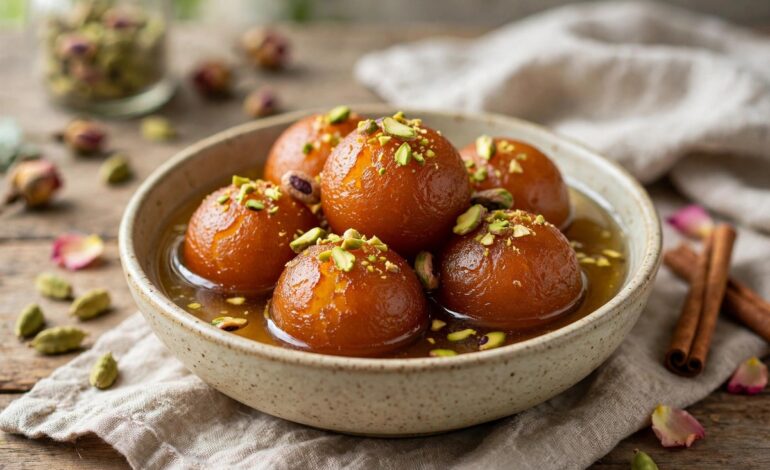
This easy gulab jamun recipe makes soft, juicy sweets with no scale, no thermometer, and no khoya to hunt down. Milk powder dough, a cardamom syrup, and a slow fry are all it takes, and the whole batch comes together in about an hour plus soaking time. The recipe makes 16 to 18 small jamuns, enough for a Diwali gathering or a family dessert with leftovers. Follow the dough test, the sizzle test, and the soaking time below, and your jamuns will be soft all the way through instead of hard in the middle.
Easy Gulab Jamun Recipe: Ingredients
For the dough:
- 1 cup (about 100g) full fat milk powder
- 1/4 cup plain flour
- 1/4 tsp baking powder
- Pinch of ground cardamom
- Pinch of fine sea salt
- 1 tbsp ghee, at room temperature
- 3 to 4 tbsp warm whole milk, added a little at a time
For the syrup:
- 1 and 1/2 cups sugar
- 1 and 1/2 cups water
- 4 green cardamom pods, lightly crushed
- A few strands of saffron (optional)
- 1 tsp lemon juice
- 1 tsp rose water, or to taste
For frying and serving:
- 500ml neutral oil, such as sunflower or vegetable, for shallow deep frying
- Chopped pistachios, to garnish
Easy Gulab Jamun Recipe: Step by Step
1. Make the syrup first. Put the sugar, water, cardamom pods, and saffron in a saucepan over medium heat. Stir until the sugar dissolves, then boil gently for 5 minutes without stirring, until the syrup feels slightly sticky between your fingers. Take it off the heat, stir in the lemon juice and rose water, and cover to keep it warm. The syrup should be warm, not boiling, when the jamuns go in.
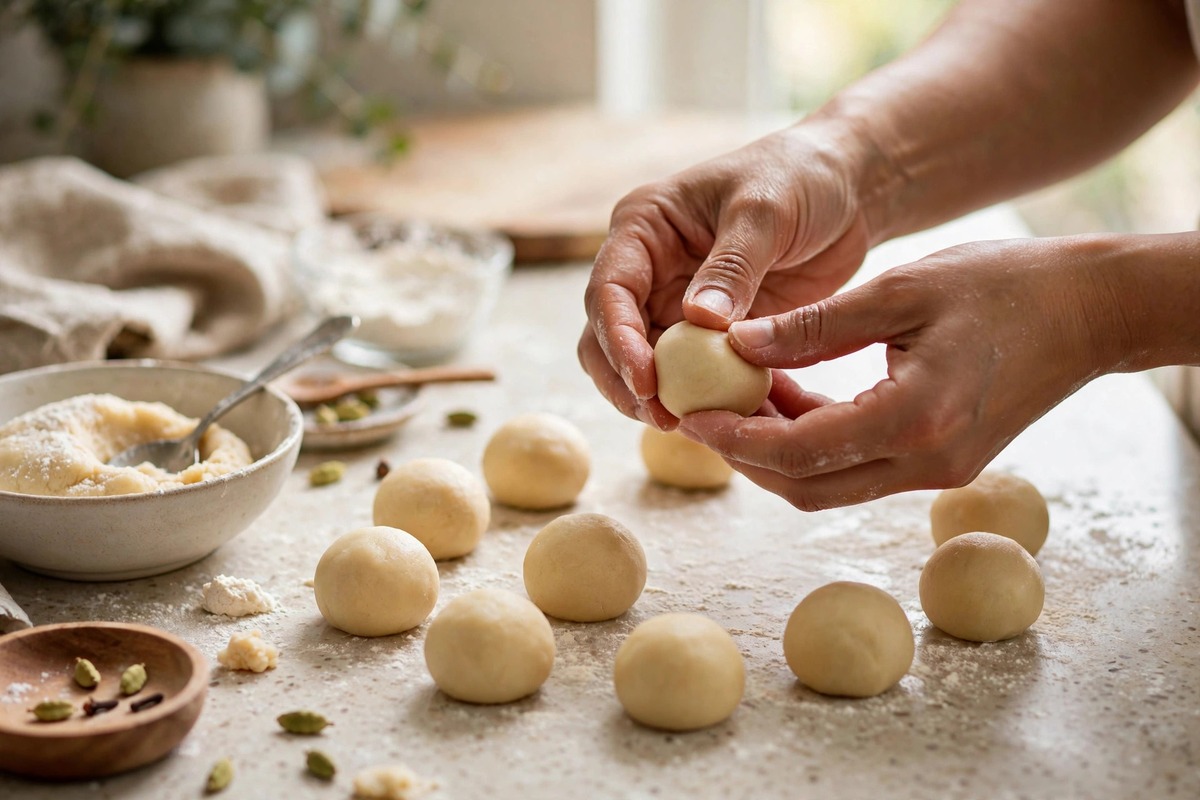
2. Mix the dough gently. Whisk the milk powder, flour, baking powder, cardamom, and salt in a bowl. Rub in the ghee with your fingertips until the mixture looks like damp sand. Add the warm milk one tablespoon at a time, mixing very gently with your fingers, until a soft, slightly sticky dough forms. Do not knead it: overworked dough is the main cause of hard jamuns. If the dough is too sticky to handle, cover it and rest it for 5 to 10 minutes.
3. Shape smooth, crack free balls. Grease your palms lightly with ghee. Pinch off a small piece of dough, about the size of a large marble, and roll it gently between your palms until perfectly smooth, with no cracks at all. Cracks split open in the oil, so re-roll any ball that shows a line. Repeat until you have 16 to 18 balls, keeping them covered so they do not dry out.
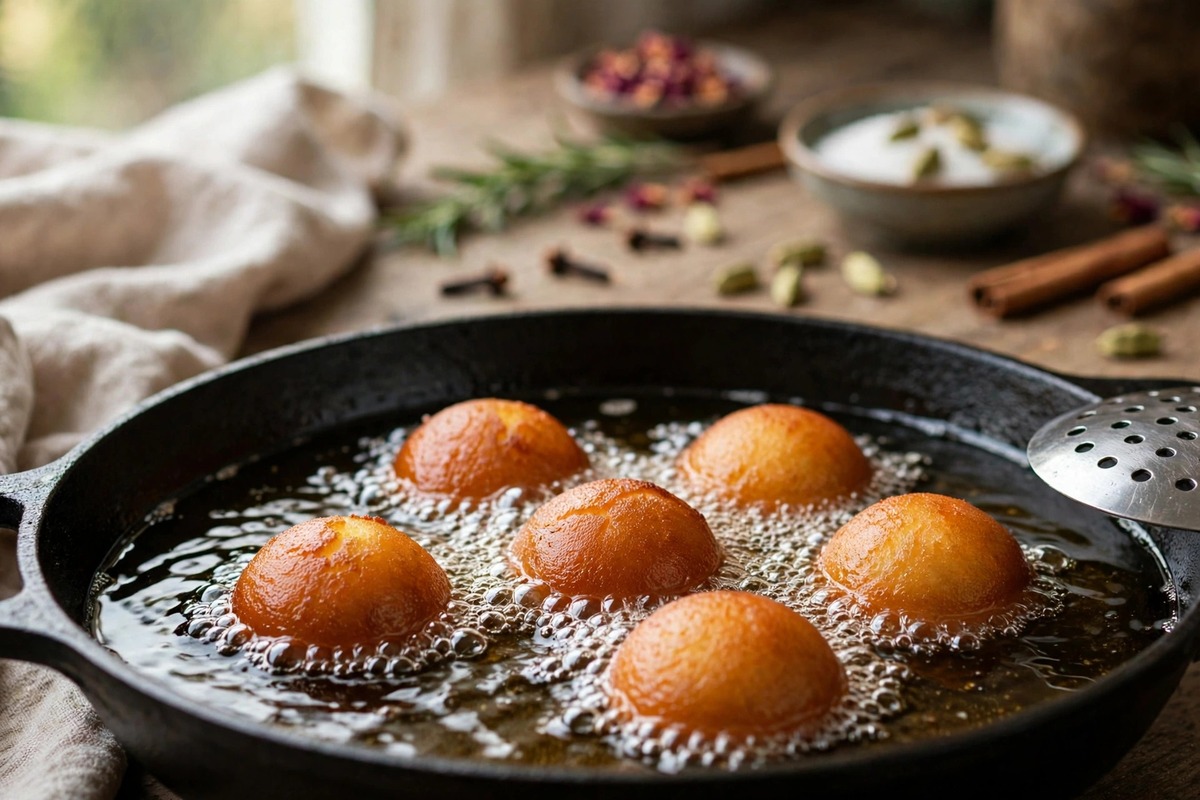
4. Heat the oil low and slow. Pour the oil into a deep, heavy pan to a depth of about 4cm and heat over medium low heat. The target for readers with a thermometer is 150C (300F), the temperature King Arthur Baking’s gulab jamun recipe specifies, with a warning that oil above 305F makes jamuns too firm. Without a thermometer, use the sizzle test: drop in one small test ball. It should sink, then rise slowly and turn golden over several minutes, not brown instantly. If it browns in under a minute, the oil is too hot: take the pan off the heat for a minute and try again.
5. Fry in small batches. Add 6 to 8 balls at a time, so the pan stays uncrowded and the oil temperature holds. Fry for 6 to 8 minutes, stirring very gently with a slotted spoon so they brown evenly all over, until deep golden brown. Keep the heat low: pale jamuns that brown fast on the outside stay raw inside, while slow fried jamuns cook through.
6. Soak until soft. Lift the fried jamuns out with a slotted spoon, drain for 1 to 2 minutes, then transfer straight into the warm syrup. They will not be submerged at first, so spoon syrup over them and cover the pan. Soak for at least 2 hours, and ideally 3 hours or overnight, until they are soft, plump, and saturated. Serve warm or at room temperature, with extra syrup spooned over and pistachios scattered on top.
Milk Powder vs Khoya vs Instant Mix: Which Version Should You Make?
| Version | Time | Cost and availability | Taste and texture | Best for |
|---|---|---|---|---|
| Milk powder (this recipe) | About 1 hour plus soaking | Cheap, milk powder is in most large supermarkets | Soft, light, evenly sweet | Beginners and Diwali batches |
| Khoya (traditional) | Longer, khoya must be made or bought fresh | Pricier, khoya is harder to find | Richer, denser, more dairy flavour | Experienced cooks chasing the classic taste |
| Instant mix | Fastest, just add milk or water | Cheap and widely sold in South Asian grocers | Reliable but less control over sweetness and texture | Last minute guests and first ever attempts |
For most home cooks, milk powder is the sweet spot: it tastes close to khoya, costs far less, and forgives small mistakes better than either alternative.
Fixing Common Gulab Jamun Problems
| Problem | Likely cause | Fix |
|---|---|---|
| Cracked balls that split in the oil | Dough too dry, or balls rolled with cracks | Add milk a teaspoon at a time until the dough is soft, and re-roll every ball until perfectly smooth |
| Hard centres | Dough overworked, or oil too hot so the outside set before the inside cooked | Mix gently, never knead, and fry low and slow at 150C (300F) for the full 6 to 8 minutes |
| Jamuns stay pale | Oil too cool, or jamuns crowded so the temperature dropped | Raise the heat slightly, fry fewer at a time, and use the sizzle test before each batch |
| Jamuns refuse to absorb syrup | Syrup too cold or too thick, or jamuns added cold | Keep the syrup warm, thin it with a splash of hot water if it has set, and add jamuns while they are still warm from the oil |
| Syrup crystallises | Sugar boiled too long, or no acid added | Boil for 5 minutes only, always add the lemon juice, and do not stir once the syrup boils |
Serving, Storage, and Make Ahead
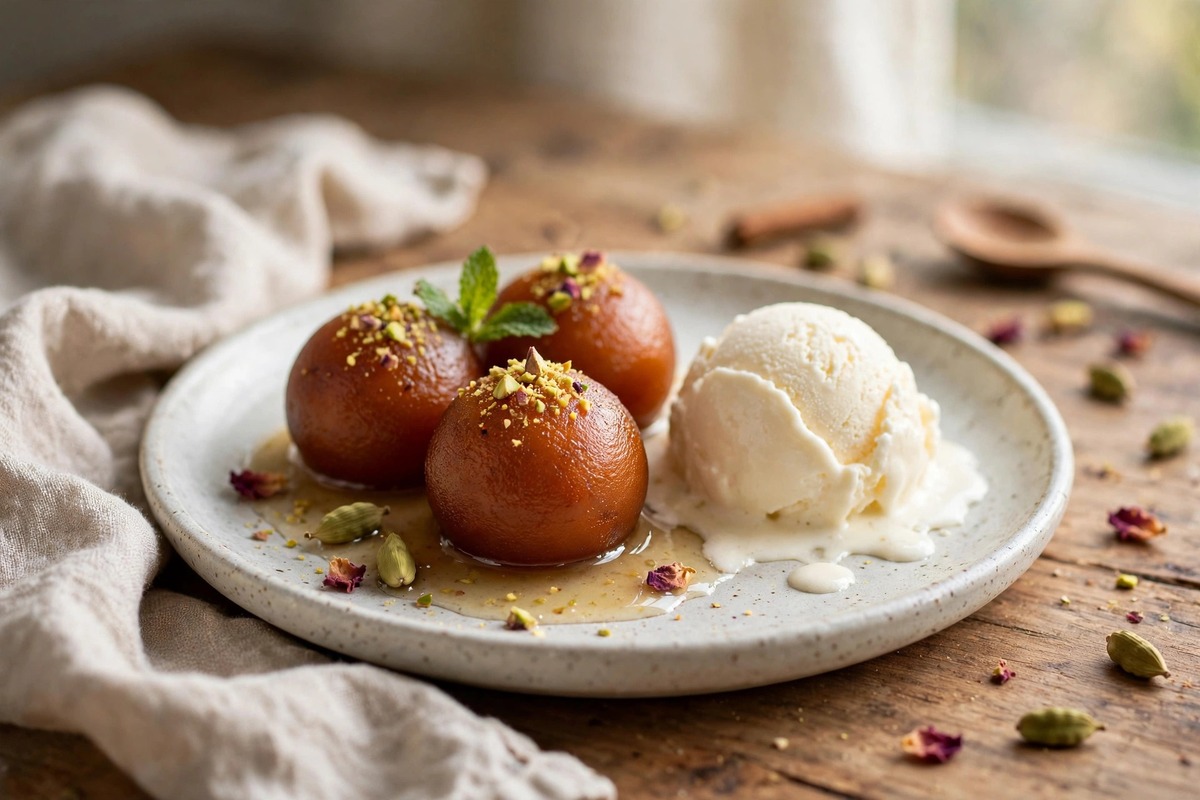
Serve gulab jamun warm with vanilla ice cream, with rabri, or simply in a bowl with extra syrup at festivals and family dinners. They pair naturally with other dishes on this site: serve them after our authentic chicken karahi recipe or our easy butter chicken recipe for a full Indian spread, and keep the evening easy with our meal prep tips for beginners if you are cooking for a crowd.
For storage, keep leftover jamuns in their syrup in an airtight container in the fridge for up to 1 week, the storage time given by King Arthur Baking. Serve cold, or re-warm gently: a few seconds in the microwave (10 to 15 seconds per portion) or a minute in warm syrup on the hob. For Diwali, make them a day ahead: fry and soak the day before, refrigerate overnight, and re-warm gently before serving, since an overnight soak makes them even softer. Uncooked dough balls do not store well, so fry the full batch and store the finished jamuns instead. For a lighter plate alongside, our crispy roasted vegetables make a useful savoury balance before dessert.
Can You Air Fry Gulab Jamun?
You can, but the result is different: air fried jamuns are drier and less evenly browned than deep fried ones, because the dough needs oil contact to puff and colour. If you try it, brush the balls generously with ghee or oil, air fry at 160C for 10 to 12 minutes, turning once, then soak in warm syrup as usual. For a first attempt, especially for Diwali guests, the classic low oil fry above is the safer choice.
Conclusion
This easy gulab jamun recipe proves that soft, juicy sweets need no special equipment: a gentle milk powder dough, crack free balls, low slow frying, and a warm cardamom syrup do all the work. Get the dough soft, the oil low, and the soak long, and the jamuns practically make themselves. Make a double batch for Diwali, keep the leftovers in syrup in the fridge, and you will have a festival dessert ready whenever guests arrive.
Frequently Asked Questions
Can I air fry gulab jamun instead of deep frying?
Yes, but expect a drier result. Brush the balls generously with ghee or oil and air fry at 160C for 10 to 12 minutes, turning once, then soak in warm syrup as usual. For the softest, most even result, the classic low oil fry in this easy gulab jamun recipe is still the better choice.
Can I make gulab jamun ahead for Diwali?
Yes, and they improve overnight. Fry and soak them the day before, refrigerate in their syrup, and re-warm gently before serving. An overnight soak makes them softer and more saturated, which is exactly what you want for festival guests.
Why did my gulab jamun turn hard?
Almost always one of two causes: the dough was overworked, or the oil was too hot. Mix the dough gently and never knead it, roll crack free balls, and fry low and slow at 150C (300F) for 6 to 8 minutes. Hard jamuns from a previous batch cannot be fixed, but the next batch will be soft if you fix those two steps.
Can I reduce the sugar in gulab jamun?
You can reduce it slightly, but not by much: the syrup needs enough sugar to stay syrupy and to soak into the jamuns. Cutting the sugar by a quarter still works if you keep the same water and the lemon juice. Below that, the syrup turns watery and the jamuns taste flat, so serve smaller portions with less syrup instead of cutting the sugar further.
Do I need a thermometer to make gulab jamun?
No. This easy gulab jamun recipe is written for cooks without one: the test ball sizzle test tells you everything you need. If the test ball browns in under a minute, the oil is too hot; if it sits pale for minutes, the oil is too cool. A thermometer helps, and 150C (300F) is the target, but it is not required.