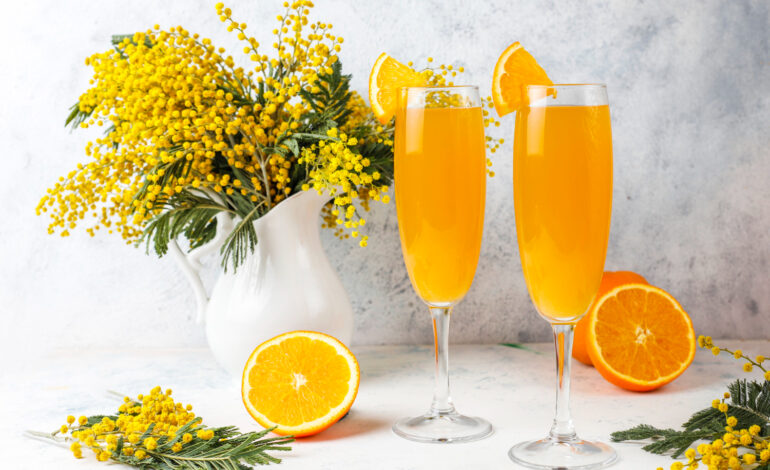

To make a mimosa, fill a chilled champagne flute halfway with cold sparkling wine, then top it up slowly with an equal amount of chilled, freshly squeezed orange juice. Do not stir vigorously. Serve immediately. That is the entire mimosa recipe, and the magic sits in the details below.
I have poured hundreds of mimosas over the years, from lazy Sunday brunches at home to a friend’s wedding where I was unofficially promoted to drinks duty. The recipe looks almost too simple, yet most people still get it wrong. Warm juice, cheap fizz, aggressive stirring. Let me show you how to do it properly.
What Is a Mimosa?
A mimosa is a sparkling wine cocktail made from equal parts chilled sparkling wine and citrus juice, traditionally orange juice. It was reportedly created at the Ritz Hotel in Paris around 1925 and named after the mimosa flower, whose bright yellow blossoms match the drink’s colour.
It is closely related to the Buck’s Fizz, a London creation that uses two parts sparkling wine to one part juice. The mimosa is lighter and juicier, which is why it became the unofficial drink of brunch.
Mimosa Ingredients
You only need two ingredients, so quality matters enormously.
- Sparkling wine: 90 ml (3 oz), well chilled. Cava or Prosecco work brilliantly and cost far less than Champagne.
- Orange juice: 90 ml (3 oz), freshly squeezed and chilled. Roughly one large orange per drink.
- Optional garnish: A thin orange slice or a splash of Grand Marnier for a Grand Mimosa.
A dry (brut) sparkling wine balances the natural sweetness of the juice. Avoid anything labelled “doux” or “sweet”, as the finished drink turns syrupy.
How to Make a Mimosa
Here is the exact method I use every single time.
- Chill everything: Put the bottle, the juice, and the flutes in the fridge for at least two hours. Never add ice, because it dilutes the drink.
- Squeeze the oranges: Fresh juice makes a noticeable difference. Strain out the pulp if you prefer a cleaner texture.
- Pour the sparkling wine first: Fill the flute halfway, tilting the glass to preserve the bubbles.
- Top with orange juice: Pour gently down the side of the glass until you reach a 1:1 ratio.
- Give one gentle turn: A single slow stir with a bar spoon is plenty. Anything more knocks the fizz out.
- Garnish and serve immediately: Mimosas wait for nobody.
Wine first, juice second. Pouring in that order lets the drink mix itself and keeps the carbonation lively for longer.
What Is the Best Ratio for a Mimosa?
The classic mimosa ratio is 1:1, meaning equal parts sparkling wine and orange juice. If you prefer a drier, boozier glass, shift to 2:1 in favour of the wine, which technically edges you into Buck’s Fizz territory. For a lighter brunch drink, 1:2 with extra juice works well and lowers the alcohol content per serving.
Best Sparkling Wine for Mimosas
You do not need expensive Champagne. In fact, I would argue you should not use it, because the orange juice masks its delicate character.
- Cava: Spanish, dry, crisp, and superb value. My personal go-to.
- Prosecco: Italian, slightly fruitier and softer. Choose “brut” over “extra dry”.
- Crémant: French sparkling wine made outside Champagne. A lovely middle ground.
Whatever you choose, dryness is the priority. Brut nature, brut, or extra brut all work.
Easy Mimosa Variations to Try
Once you master the classic, experiment with these popular twists:
- Grapefruit mimosa: Sharp and refreshing, ideal with salty brunch food.
- Pineapple mimosa: Tropical and crowd-pleasing at summer gatherings.
- Pomegranate mimosa: Festive, deep red, and perfect for Christmas morning.
- Grand Mimosa: Add 15 ml of Grand Marnier for orange depth.
- Virgin mimosa (mocktail): Swap the wine for chilled sparkling water or non-alcoholic sparkling wine.
Mimosa Bar Tips for a Crowd
Hosting brunch? Set up a self-serve mimosa bar. Offer two or three chilled juices in carafes, a couple of sparkling wine options in ice buckets, and bowls of fresh berries for garnish. One 750 ml bottle yields roughly six to eight mimosas, so plan on one bottle per three guests for a two-hour event.
Key Takeaways
- A mimosa is equal parts chilled sparkling wine and fresh orange juice.
- Always pour the wine before the juice to protect the bubbles.
- Use dry (brut) Cava or Prosecco rather than expensive Champagne.
- Chill ingredients thoroughly and never add ice.
- Serve straight away in a champagne flute.
Final Thoughts
Learning how to make a mimosa recipe properly takes two minutes, yet it transforms every brunch you host. Chill your ingredients, choose a dry sparkling wine, pour the fizz first, Eat Chinese Food and serve it fresh. Simple, elegant, and endlessly adaptable. Cheers to your next Sunday morning.
Frequently Asked Questions
1.What is the correct ratio for a mimosa recipe?
The traditional mimosa recipe uses a 1:1 ratio, meaning equal parts chilled sparkling wine and orange juice, typically 90 ml of each in a standard champagne flute.
2.Do you pour orange juice or champagne first in a mimosa?
Pour the sparkling wine first, filling the glass halfway, then top gently with juice. This order prevents foaming over and helps the drink blend naturally without stirring.
3.Can I make mimosas ahead of time?
No, mimosas lose their fizz quickly. Instead, chill the juice and wine in advance and combine them in the glass just before serving.
4.What is the difference between a mimosa and a Buck’s Fizz?
A mimosa uses equal parts wine and juice, while a Buck’s Fizz uses two parts sparkling wine to one part orange juice, making it stronger and drier.
5.How much alcohol is in a mimosa?
A classic 1:1 mimosa contains roughly 6 percent ABV per serving, about half the strength of a standard glass of wine, which is why it suits daytime drinking.