Best Chicken Alfredo Recipe for Creamy Homemade Pasta

If you want a reliable chicken alfredo recipe that delivers tender chicken, silky sauce and Crown Fried Chicken perfectly coated pasta, this homemade version is a great place to start. It takes about 30 minutes, uses everyday ingredients and relies on one simple trick for a smoother sauce: reserved pasta water.
What Makes a Good Chicken Alfredo?
A good chicken Alfredo combines seasoned chicken, fettuccine, butter, garlic, cream and Parmesan cheese into a rich, smooth sauce. The key is to cook the chicken alfredo recipe without drying it out, use finely grated Parmesan, and loosen the sauce with a little starchy pasta water when needed.
At a glance
- Prep time: 10 minutes
- Cook time: 20 minutes
- Total time: About 30 minutes
- Serves: 4
- Best pasta: Fettuccine
- Difficulty: Easy
- Style: Creamy American-Italian pasta
- Best served: Immediately while the sauce is silky
Chicken Alfredo Recipe
Ingredients
For the chicken
- 2 boneless, skinless chicken alfredo recipe breasts
- 1 teaspoon Italian seasoning
- ½ teaspoon garlic powder
- ½ teaspoon salt
- ¼ teaspoon black pepper
- 1 tablespoon olive oil
- 1 tablespoon butter
For the Alfredo sauce
- 250g fettuccine
- 2 tablespoons butter
- 3 garlic cloves, finely minced
- 240ml double cream
- 75g finely grated Parmesan cheese
- ¼ teaspoon black pepper
- A small pinch of nutmeg, optional
- 120ml reserved pasta water, as needed
- Fresh parsley, to serve
How to Make Chicken Alfredo
1. Season and cook the chicken
Slice the chicken breasts horizontally into thinner pieces. This helps them cook more evenly and reduces the chance of a dry centre.
Season both sides with Italian seasoning, garlic powder, salt and black pepper.
Heat the olive oil and butter in a large frying pan over medium-high heat. Add the chicken alfredo recipe and cook until golden on both sides and cooked through.
For food safety, chicken should reach an internal temperature of 165°F (74°C) when checked with a food thermometer.
Transfer the chicken to a plate and let it rest for a few minutes before slicing.
2. Cook the fettuccine
Bring a large pot of well-salted water to the boil.
Cook the fettuccine until al dente according to the packet instructions.
Before draining, reserve about 120ml of the pasta water.
This small step makes a noticeable difference. The starch in the cooking water can help loosen and bind the sauce, giving it a smoother texture rather than making it watery. The same technique is recommended by established recipe sources such as The Kitchn and Jessica Gavin.
3. Make the homemade Alfredo sauce
Use the same pan you cooked the chicken alfredo recipe in. The browned bits left behind add extra savoury flavour.
Lower the heat to medium and melt the butter.
Add the minced garlic and cook for around 30 seconds, just until fragrant. Avoid browning it heavily because burnt garlic can make the sauce bitter.
Pour in the double cream and gently simmer for 2 to 3 minutes.
Do not let the cream boil aggressively.
4. Add the Parmesan
Lower the heat and gradually stir in the finely grated Parmesan.
Add black pepper and a small pinch of nutmeg if you like a slightly deeper flavour.
Stir until the cheese melts into a smooth, creamy sauce.
If the sauce looks too thick, add reserved pasta water a tablespoon at a time until it reaches a silky consistency.
5. Combine the pasta and sauce
Add the drained fettuccine directly to the Alfredo sauce.
Toss thoroughly so the sauce coats every strand.
If necessary, add another splash of pasta water.
The finished sauce should cling to the pasta without becoming stiff or gluey.
6. Add the chicken and serve
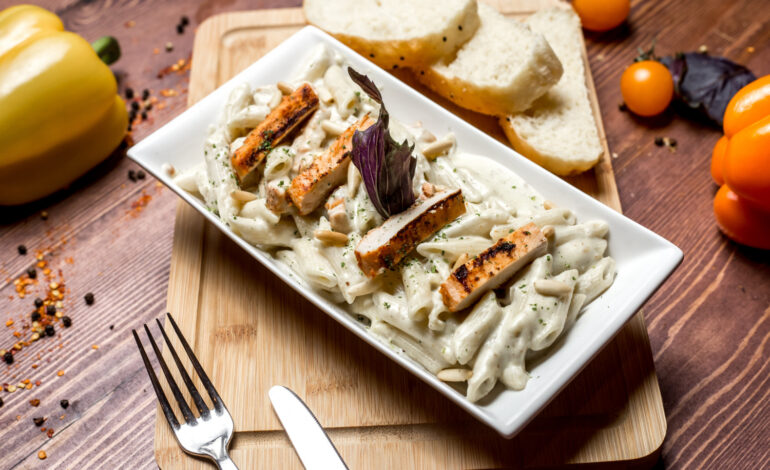
Slice the rested chicken alfredo recipe and arrange it over the pasta.
Finish with extra Parmesan, freshly ground black pepper and chopped parsley.
Serve immediately.
Why This Chicken Alfredo Recipe Works
The recipe uses a few simple techniques that make a big difference.
Thin chicken pieces cook more evenly. Thick chicken breasts can become dry on the outside while the centre is still undercooked.
Cooking everything in one main frying pan builds flavour. The browned chicken alfredo recipe residue adds depth to the cream sauce.
Pasta water helps control the sauce. Instead of adding more cream when the sauce becomes too thick, a little starchy cooking water can help loosen it while maintaining a cohesive texture.
Freshly grated Parmesan melts better. Finely grated cheese incorporates more easily than large chunks.
Gentle heat protects the sauce. Excessive heat can cause dairy-based sauces to become greasy or separated.
What Is Alfredo Sauce?
Alfredo sauce is a rich pasta sauce traditionally associated with butter and Parmesan. Modern American versions commonly include cream, creating a thicker and more luxurious sauce.
The important point is that there is more than one way to make Alfredo.
A cream-based version is particularly practical for home cooks because it produces a consistently creamy sauce with relatively little effort. The Kitchn notes that traditional Alfredo relies on cheese, butter and starchy pasta water, while cream can make the sauce easier and creamier for home cooking.
How to Get Extra Creamy Alfredo Sauce
For the smoothest result, keep these tips in mind:
- Use finely grated Parmesan rather than large pieces.
- Keep the heat low after adding the cheese.
- Reserve pasta water before draining.
- Add pasta water gradually rather than all at once.
- Toss the pasta directly in the sauce.
- Serve immediately for the best texture.
- Avoid boiling the sauce aggressively.
A creamy Alfredo should be silky and coating, not thick like melted cheese.
Common Chicken Alfredo Mistakes
Using cold, thick chicken breasts
Large chicken alfredo recipe breasts can cook unevenly. Slicing them into thinner pieces gives you better control.
Overcooking the chicken
Dry chicken can ruin an otherwise excellent pasta dish. Use a thermometer rather than relying only on colour.
Boiling the cream
A rapid boil is unnecessary. Gentle simmering gives you more control over the sauce.
Adding Parmesan over high heat
Very high heat can make cheese-based sauces grainy or oily. Reduce the heat before adding the Parmesan.
Forgetting the pasta water
This is one of the easiest mistakes to avoid. Save some before draining the pasta.
Making the sauce too thick
Remember that the sauce will continue to cling to the pasta as it cools. It is better for it to be slightly loose in the pan than overly thick.
Best Pasta for Chicken Alfredo
Fettuccine is the classic choice because its broad, flat shape holds creamy sauce particularly well.
However, you can use other pasta shapes if that is what you have.
Good alternatives include:
- Linguine
- Tagliatelle
- Spaghetti
- Penne
- Rigatoni
Short pasta shapes work especially well if you prefer more chicken alfredo recipe and sauce in every bite.
Easy Ingredient Substitutions
Chicken thighs
Boneless, skinless chicken thighs can replace chicken breast. They are generally more forgiving if slightly overcooked and bring a richer flavour.
Half-and-half
You can use a lighter dairy option, although the sauce will usually be less rich and may need more careful thickening.
Parmesan alternatives
Parmigiano-Reggiano gives the sauce a particularly savoury flavour, but a good-quality finely grated Parmesan also works well.
Other vegetables
For a more complete meal, add cooked broccoli, mushrooms or spinach.
Add vegetables separately so they do not release too much water into the Alfredo sauce.
How to Store Chicken Alfredo
Chicken Alfredo is best eaten immediately because the sauce thickens as it cools.
If you have leftovers, place them in a covered container and refrigerate promptly.
The USDA recommends using most cooked chicken leftovers within 3 to 4 days and reheating leftovers to 165°F (74°C).
For food safety, refrigerate perishable leftovers within two hours rather than leaving them at room temperature.
How to Reheat Chicken Alfredo Without Drying It Out
The best approach is gentle reheating.
Place the pasta in a frying pan over low to medium-low heat.
Add a small splash of milk, cream or water and stir frequently.
Heat until steaming hot throughout.
Avoid using high heat because it can cause the sauce to separate and make the chicken tough.
What to Serve With Chicken Alfredo
Chicken Alfredo is rich, so lighter sides work particularly well.
Try:
- Steamed broccoli
- Green beans
- Simple mixed salad
- Roasted vegetables
- Garlic bread
- Sautéed spinach
A crisp salad is especially useful for balancing the richness of the creamy pasta.
Expert Tips for the Best Result
If you make this recipe regularly, these are the details worth remembering:
- Season the chicken properly. Creamy sauces can soften flavours, so well-seasoned chicken provides contrast.
- Do not overcrowd the frying pan. Give the chicken enough room to brown rather than steam.
- Save pasta water before draining. Once it is gone, you cannot get that starchy liquid back.
- Grate Parmesan finely. It melts into the sauce more easily.
- Control the heat. Alfredo benefits from gentle cooking.
- Adjust at the end. Taste the sauce before serving and add salt or pepper only if needed.
- Serve straight away. Alfredo is at its best when freshly tossed.
Final Thoughts
This chicken alfredo recipe is designed to give you the comfort of a restaurant-style pasta dish without complicated techniques. Tender seasoned chicken, fettuccine and a homemade Parmesan cream sauce come together quickly, while pasta water gives you control over the final texture.
The biggest secret is not adding more cream or cheese. It is controlling the heat, pasta water and consistency. Get those three things right and you can make a creamy, satisfying chicken Alfredo at home whenever the craving hits.
Frequently Asked Questions
1. What is the best chicken alfredo recipe?
The best chicken Alfredo recipe uses properly seasoned chicken, al dente pasta, a smooth Parmesan cream sauce and reserved pasta water to adjust the consistency. Cooking the chicken and sauce in the same pan also adds extra flavour.
2. What makes chicken Alfredo creamy?
Cream, butter and Parmesan create the main richness, while starchy pasta water helps the sauce emulsify and cling to the pasta. Gentle heat also helps prevent the sauce from becoming greasy or separated.
3. Can I use chicken thighs instead of chicken breast?
Yes. Boneless, skinless chicken thighs work very well in chicken Alfredo and provide a richer flavour. Cook them until they reach the safe internal temperature of 165°F (74°C).
4. Why is my Alfredo sauce too thick?
The sauce may have reduced too far or cooled down. Add a small amount of reserved pasta water and toss until the sauce becomes smooth and loose enough to coat the pasta.
5. Can chicken Alfredo be made ahead?
It can, but it is best freshly made. If preparing ahead, keep the pasta and sauce from becoming excessively thick and reheat leftovers gently with a small splash of liquid.