
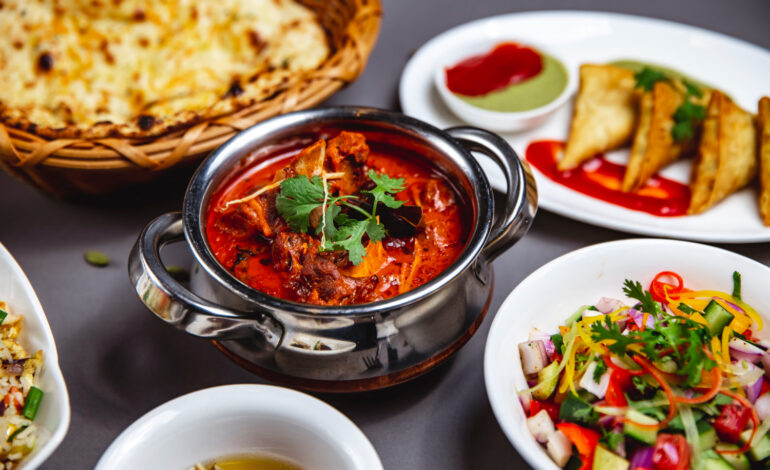
What to Order at Indian Restaurant

Staring at an Indian restaurant menu can feel overwhelming. Curries, biryanis, tandoori dishes and unfamiliar names all compete for attention, and one wrong choice can mean a plate that’s far too spicy or far too plain.
Knowing what to order at an Indian restaurant comes down to balancing one starter, one main, one bread or rice dish, and a cooling side. This simple structure works for almost any Indian menu, anywhere in the world.
This guide breaks down exactly what to order at an Indian restaurant, course by course, with real examples, common mistakes to avoid, and tips from years of ordering (and occasionally getting it wrong).
Quick Answer
What to Order at Indian Restaurant: start with a tandoori starter (chicken tikka or paneer tikka), pick one mild curry and one spicier curry, add naan or rice, and finish with raita and a dessert like gulab jamun.
Understanding an Indian Restaurant Menu
Indian menus are usually organised by cooking method and region rather than by ingredient alone. This matters because it shapes how dishes taste.
Tandoori dishes are cooked in a clay oven and tend to be drier and smokier. Curries are simmered in sauce and vary hugely in spice and richness.
Regional Cuisines You’ll Often See
- North Indian: creamy, butter-based curries like butter chicken and dal makhani
- South Indian: dosas, idlis and coconut-based curries with rice as the staple
- Punjabi: tandoori meats, rich gravies and stuffed breads
- Goan and coastal: seafood curries with tamarind and coconut
Understanding Spice Levels
| Spice Level | Example Dish | Good For |
| Mild | Butter chicken, korma | Spice-sensitive diners |
| Medium | Tikka masala, dal | Most first-timers |
| Hot | Vindaloo, madras | Spice lovers |
What to Order at an Indian Restaurant: Course by Course
Starters Worth Ordering
Chicken tikka, paneer tikka and onion bhaji are reliable starters. They’re flavourful without being overly hot, making them a safe opening for any table.
Best Main Courses to Order
For a balanced meal, order one creamy curry (butter chicken or korma) alongside one spicier option (chicken madras or lamb rogan josh). This contrast keeps the meal interesting.
Vegetarians should look for dal makhani, palak paneer or chana masala, all of which are staples on most menus.
Breads and Rice to Pair
Garlic naan and plain naan suit richer curries, while rice works better with thinner, spicier sauces. Biryani can stand alone as a complete dish if you’re short on time.
Don’t Skip the Dessert
Gulab jamun (a soft, syrup-soaked dumpling) and kheer (rice pudding) are the most common and crowd-pleasing choices.
How to Order at an Indian Restaurant: Step by Step
- Choose one starter to share across the table.
- Pick a mild curry and a spicier curry to balance flavours.
- Add a bread and a rice dish, not just one or the other.
- Order raita or yoghurt to cool down spicier bites.
- Finish with a dessert and chai if available.
Benefits of Knowing What to Order at an Indian Restaurant
- Avoids overordering or underordering for the table
- Reduces the risk of a dish being too spicy to enjoy
- Helps vegetarians and vegans navigate the menu confidently
- Makes the meal feel structured rather than random
Practical Examples: Sample Combos
For a couple: paneer tikka, butter chicken, garlic naan, and gulab jamun.
For a vegetarian table: vegetable samosas, dal makhani, jeera rice, and raita.
For spice lovers: chicken 65, lamb vindaloo, plain rice, and mango lassi to balance the heat.
Real-Life Use Cases
A first date often calls for milder, less messy dishes like butter chicken or paneer tikka, paired with naan.
Family dinners work well with a mix of dishes shared across the table, since this lets everyone try a bit of everything.
For someone who is spice-sensitive, sticking to korma, butter chicken or biryani with mild spice avoids an uncomfortable evening.
Latest Indian Dining Trends and Statistics
Indian dining out has grown steadily in recent years. According to industry data from the National Restaurants Association of India, the country’s food service market is on track to become one of the largest in the world within the next few years, with full-service restaurants leading the way.
In the UK, Statista reports that Indian food remains one of the most consistently popular cuisines eaten out, year after year, alongside Chinese and Thai food.
Globally, demand for plant-based and lighter Indian dishes is rising too, with more menus now offering clearly marked vegan options.
Common Mistakes to Avoid
- Ordering only spicy dishes without a cooling side
- Skipping bread or rice and ending up with too much sauce and nothing to mop it with
- Assuming “curry” means one flavour, when it covers hundreds of regional variations
- Not asking staff about spice levels before ordering
Expert Tips for Ordering
Ask your server which dish is the restaurant’s speciality. Most What to Order at Indian Restaurant have a regional focus, and staff can usually point to their strongest dish.
If you’re unsure about spice, always ask for medium rather than guessing, since “hot” varies wildly between kitchens.
Order family-style where possible. Sharing several dishes gives a far better sense of Indian cuisine than one plate alone.
Key Takeaways
- Balance one starter, one mild curry, one spicier curry, and a bread or rice dish
- Vegetarian options like dal makhani and chana masala are widely available
- Raita and lassi help manage spice levels
- Ask staff for recommendations based on the restaurant’s regional specialty
Conclusion
Working out what to order at an Indian restaurant doesn’t need to be complicated. Stick to a simple structure of starter, mains, bread or rice, and dessert, and you’ll come away with a satisfying meal every time.
Next time you’re deciding what to order at an Indian restaurant, try one of the combos above, or ask your server for their personal recommendation.
Frequently Asked Questions
1.What is the most popular dish to order at an Indian restaurant?
Butter chicken is widely considered the most popular and approachable choice for most diners.
2.What should vegetarians order at an Indian restaurant?
Dal makhani, palak paneer and chana masala are reliable, widely available vegetarian options.
3.Is it normal to order multiple dishes at an Indian restaurant?
Yes, sharing several dishes family-style is common and gives a fuller taste of the cuisine.
4.How do I avoid ordering something too spicy?
Ask staff directly about spice levels and choose mild options like korma or butter chicken if unsure.
5.What should I order if I’m trying Indian food for the first time?
Start with chicken tikka, butter chicken, garlic naan and a mango lassi for a balanced introduction.